Families reassured as asbestos sand scare widens
Children exposed to toxic, coloured sand that’s forced dozens of schools to close face an extremely low risk of asbestos contamination, an expert says.

Experts have downplayed the risk to children as early childhood centres and schools around Australia are removing and disposing of coloured sand products with trace amounts of asbestos.
More than 70 public schools across Australia were closed on Monday due to the potential contamination.
In a recall notice published on Sunday, the Australian Competition and Consumer Commission (ACCC) said laboratory testing had detected asbestos in some samples of Kmart Australia’s Active Sandtub 14 piece Sand Castle Building Set, sold at both Kmart and Target, and Magic Sand tubs in blue, green and pink, that were only sold at Kmart.
It warned the products “may cause a risk to health”, though the chance of children inhaling airborne asbestos from them was low.
Sunday’s warning came after more than a dozen primary and preschools in the ACT were fully or partially closed last week after the ACCC on Wednesday recalled another range of children’s sand products, two supplied by local wholesaler Shamrock Australia and the other two by art supplies company Educational Colours.
A Brisbane school was closed on Friday while another was identified with the affected product, the Queensland government said.
Some school closures could last days.
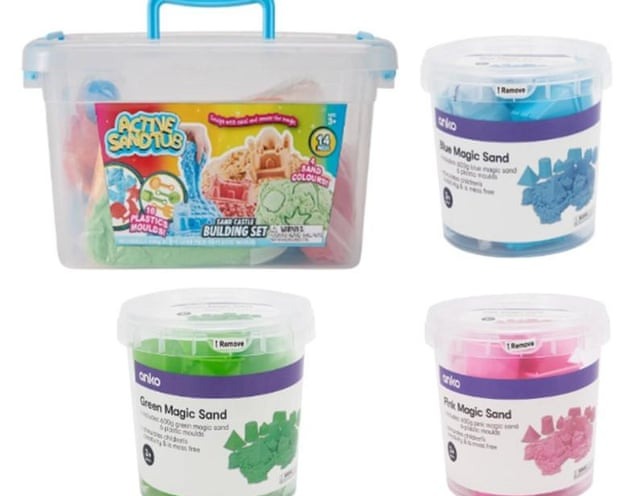
The ACCC recalled Kmart coloured sands on Sunday. Photo: ACCC
You might like


Despite the precautions, families have been told they shouldn’t be alarmed by the asbestos scare.
Deadly dust
Asbestos is a “deadly dust” and exposure to even a small amount can lead to terrible consequences, the Asbestos and Dust Diseases Research Institute’s Anthony Linton said.
But asbestos did not appear to be airborne in the latest scare which helped minimise the risk, he said.
“They (people) are absolutely right to be nervous, but … it feels as though very much that this asbestos is within the sand itself,” Linton said.
“So it is not particles floating through the air that is going to be breathed into the lungs.”
It was too early for parents to look for symptoms of asbestos exposure in their children and there was no simple test for it, Linton said.
The contamination risk for the children and adult teachers exposed to the sand across dozens of schools was considered “very low”.
“However, you can never say 100 per cent and that’s why the appropriate amount of caution is essential,” he said.
People who find the sand product at their homes should dispose of it properly to avoid a repeat of the Sydney asbestos crisis, when asbestos-contaminated mulch was found across dozens of parks, schools and other public NSW sites in 2024.
Stay informed, daily
“There has been cases where people will throw asbestos into green bins that then get processed and turned into mulch,” hazardous materials management firm EDP Consultants’ John Batty said.
“We don’t want these products getting back into the community,” Batty explained.
People should double bag the product, seal it with strong tape and label it “do not open” before visiting the Asbestos and Silica Safety and Eradication Agency website for more information.
Asbestos removal contractors worked over the weekend to remove sand from ACT schools.
Licensed asbestos contractors will test, remediate and clear the spaces for use again, the ACT government said.
“All of the air testing that our contractors have done across public schools so far has been negative to airborne asbestos.”
Safety alerts have been issued in nearly every state and territory urging schools, consumers and service providers to stop using the sand products.
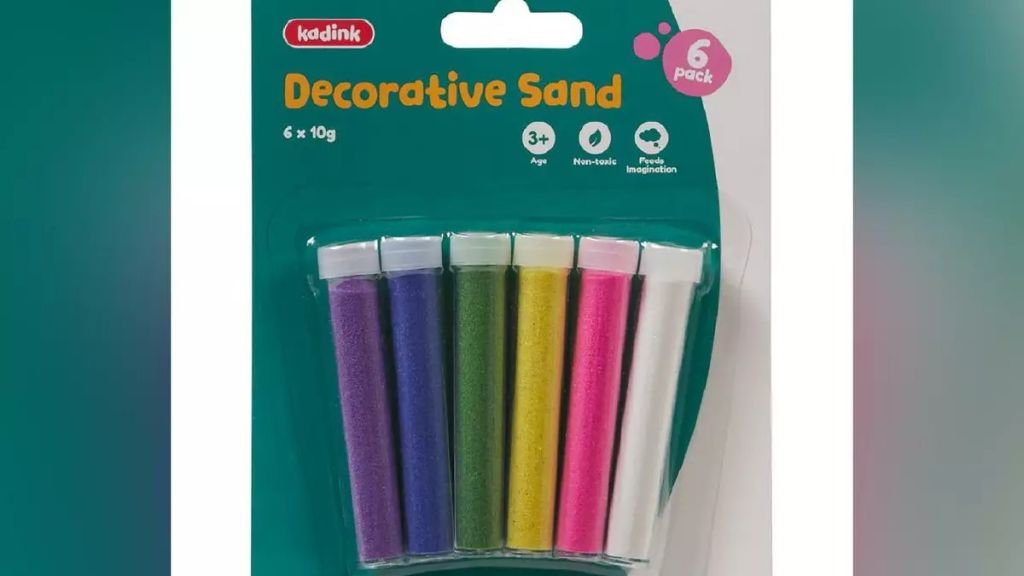
The Kadink sand is being removed from schools. Photo: ACCC
Products linked to the asbestos scare have been identified at more than 140 sites in South Australia, with hazard alerts issued but no schools closed.
The product found at ACT schools was imported from China and sold as Kadink Decorative Sand in tubes weighing 10 grams, Worksafe ACT said.
It comes after a national recall of children’s sand products sold at retailers including Officeworks, Educating Kids, Modern Teaching Aids and Zart Art.
Spin Master, a toy maker, said its popular Kinetic Sand was not subject to the recall and remains safe for use.
-with AAP
Want to see more stories from InDaily Qld in your Google search results?
- Click here to set InDaily Qld as a preferred source.
- Tick the box next to "InDaily Qld". That's it.


