The political mud flies as election date looms, but will the voters take much notice?
In these scrappy days before the Prime Minister announces the election date, the mud and the personal insults are flying, despite the politicians knowing voters hate this sort of thing.
You might like


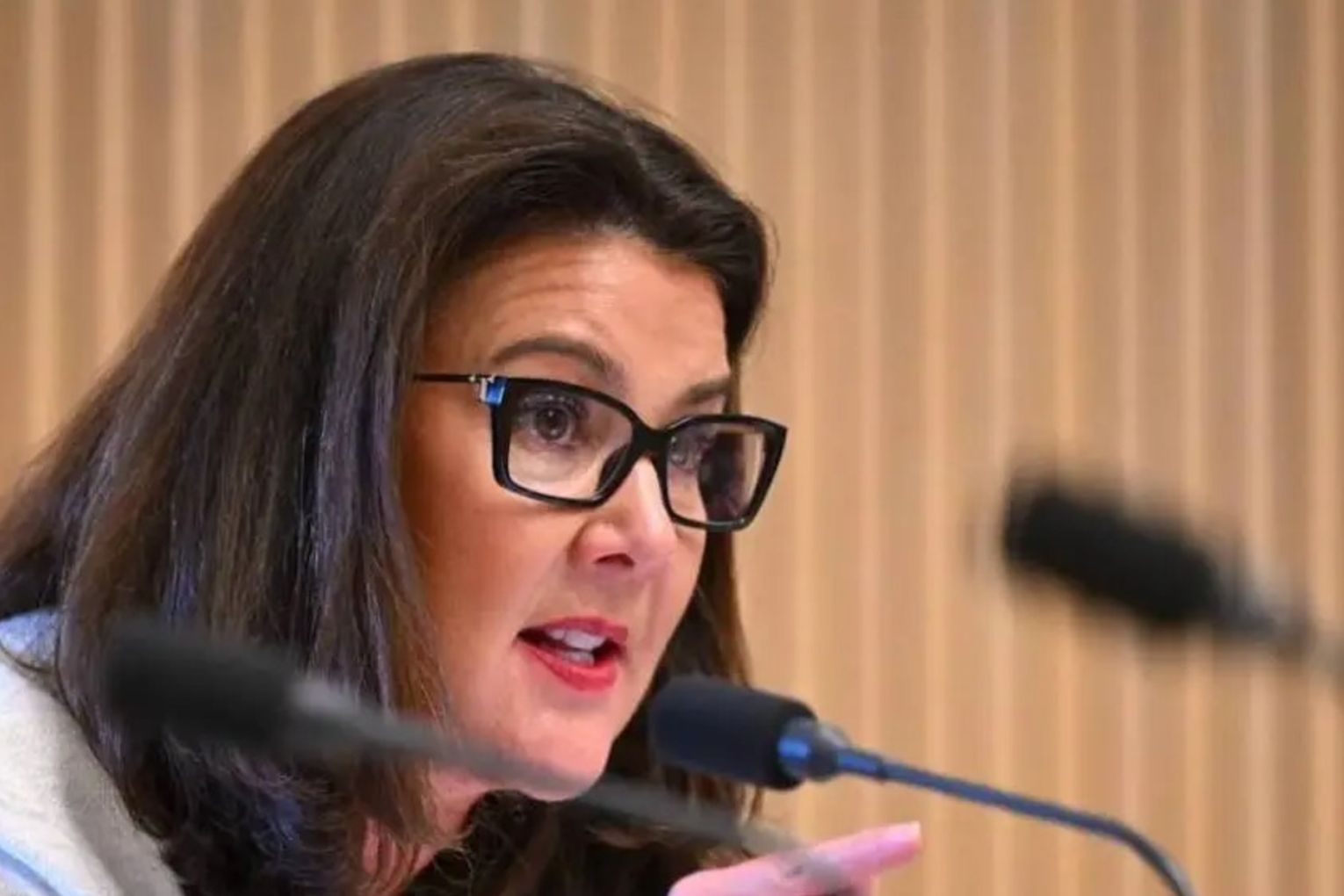
On Wednesday morning TV, shadow finance minister Jane Hume, usually reasonably restrained with her language, called Employment Minister Murray Watt “king grub” of the “grubbiest people you will ever come across” – a reference to Labor’s pursuit of Peter Dutton’s past share trading.
As Watt remarked, “That’s quite an accusation”.
Hume was later on the warpath in a Senate estimates hearing, where Treasury Secretary Steven Kennedy fended off an opposition attack suggesting, in essence, that Treasurer Jim Chalmers had sought to make Treasury his political pawn.
Dutton spent most of his Wednesday news conference pushing back on attacks on his integrity relating to his purchase of bank shares during the global financial crisis, and dealing with questions about his acquisition of an extensive property portfolio over decades.
What the opposition dubs Labor’s “dirt unit” apparently drove the share story. The core of it is that Dutton bought bank shares just before the Rudd government announced its guarantee to ensure the financial security of the banks.
Labor demanded to know whether Dutton had insider knowledge of the imminent guarantee through a Rudd government briefing of the opposition. Dutton, who declared the share purchase, says he had no information other than what was in the public domain.
The story about Dutton’s property portfolio – which he has unloaded, no doubt as part of preparations in pursuit of the prime ministership – ran in Nine media. The report said
"Peter Dutton has made $30 million of property transactions across 26 pieces of real estate over 35 years, making him one of the country’s wealthiest-ever contenders for prime minister."
Dutton was late with declaring on the parliamentary register some of the transactions.
Nine says the story didn’t come from a Labor “dirt unit”, but it was grist for an embattled government.
Dirt digging, mud throwing, and exploitation of the politics of envy are recurring features of election campaigns. Whether they’ll have much resonance this time is doubtful.
The share story, going back the best part of a couple of decades, doesn’t sound like a smoking gun. We’ve heard about Dutton’s property buying before. We know he has plenty of money. Not as much, of course, as earlier PMs Malcolm Turnbull and Kevin Rudd.
Dutton, working on the assumption these stories will be brief wonders, kept his cool.
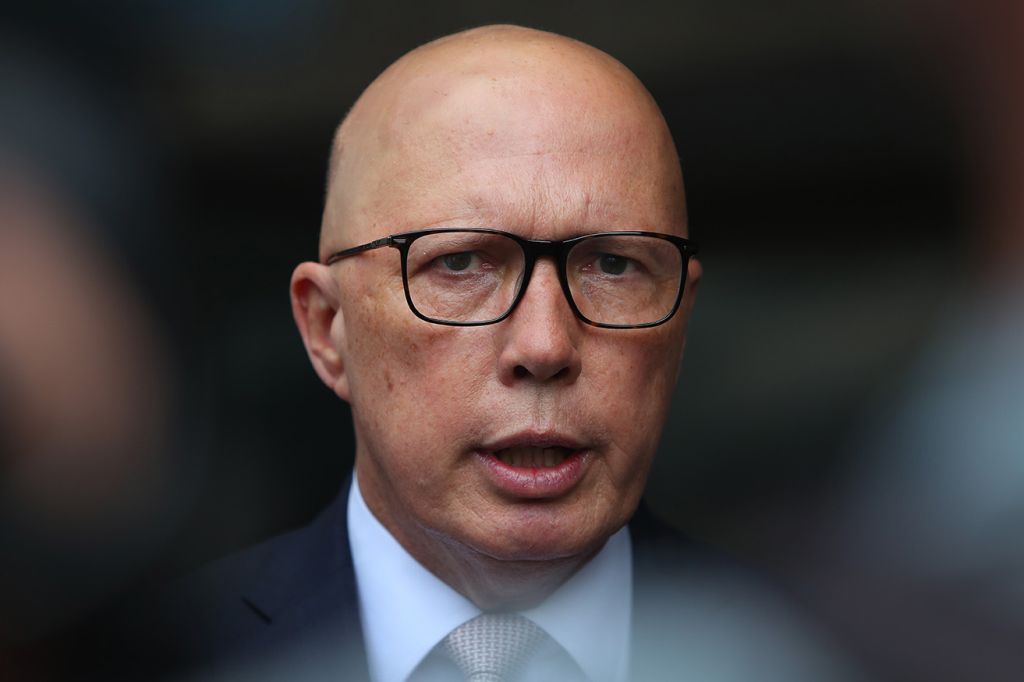
Dutton played it cool on revelations about his property portfolio and shares. Photo: AAP
He hasn’t provided more details about the bank shares, relying on a general response that everything had been above board.
On his property purchases, he made it clear he’s proud of his climb up the aspirational ladder since he was a “butcher’s boy” in those days when he had a job in a butcher’s shop.
For Dutton, the mud is all in a day’s work. The attack on Kennedy is in a rather different category.
In the run-up to an election, Treasury often finds itself in an awkward position, as a government seeks to use it, while an opposition objects. This time, Chalmers employed it to discredit the opposition’s policy to give a tax break to small businesses for taking their workers or clients to a meal.
Treasury doesn’t cost opposition policies. So the government asked it to cost a theoretical policy that was similar to that of the Coalition. Perhaps unsurprisingly, Treasury came up with a much bigger cost than the opposition said was produced by the Parliamentary Budget Office.
Kennedy insisted to the Senate hearing, “we do not act politically”.
“I have behaved no differently with this government, nor have I observed the department’s behaving any differently,” he said. “I understand how the circumstances might lead you to question that, but all I can do is assure you that that has not been the case.”
If Dutton became prime minister, would Kennedy’s position be at risk?
It shouldn’t be. Kennedy, appointed by the Coalition, served the previous Liberal government very well and was a key figure in its ambitious economic response to the COVID pandemic. That response kept many people in jobs and the economy out of recession.
While Kennedy was taking the flak in estimates, Chalmers had been in Washington making Australia’s case for an exemption of the Trump aluminium and steel tariffs.
Chalmers’s visit was timely and carefully managed. The treasurer said before he left Australia he wouldn’t obtain an outcome on tariffs – it was about making Australia’s case. So when there was not an outcome, it was not a disappointment. “My task here in DC wasn’t to try and conclude that discussion, it was to try and inform it,” Chalmers told a news conference after his talks.
Chalmers spent time with US Treasury Secretary Scott Bessent and National Economic Council Director Kevin Hassett. He said the discussion was “wider-ranging than just steel and aluminium”. Bessent also was a speaker at the superannuation summit held at the Australian embassy (a coup for ambassador Kevin Rudd as well as Chalmers).
In his 2023 Monthly essay, Chalmers argued for the super funds to invest more widely in Australia, notably in social housing.
At the embassy conference, Chalmers was able to look to a much wider horizon for the funds.
"The current value of Australian super fund investments in the US is around $400 billion – due to reach $1 trillion over the next decade. So, Australia’s superannuation sector has the size, scale and presence to play a big role in driving new American industries and creating jobs.
"
Michelle Grattan, Professorial Fellow, University of Canberra
This article is republished from The Conversation under a Creative Commons license. Read the original article.
Want to see more stories from InDaily Qld in your Google search results?
- Click here to set InDaily Qld as a preferred source.
- Tick the box next to "InDaily Qld". That's it.


