How these twin sisters might hold the key to solving breast cancer puzzle
When Tracey Hutchinson was diagnosed with breast cancer, her twin sister Tania was told it was only a matter of time.
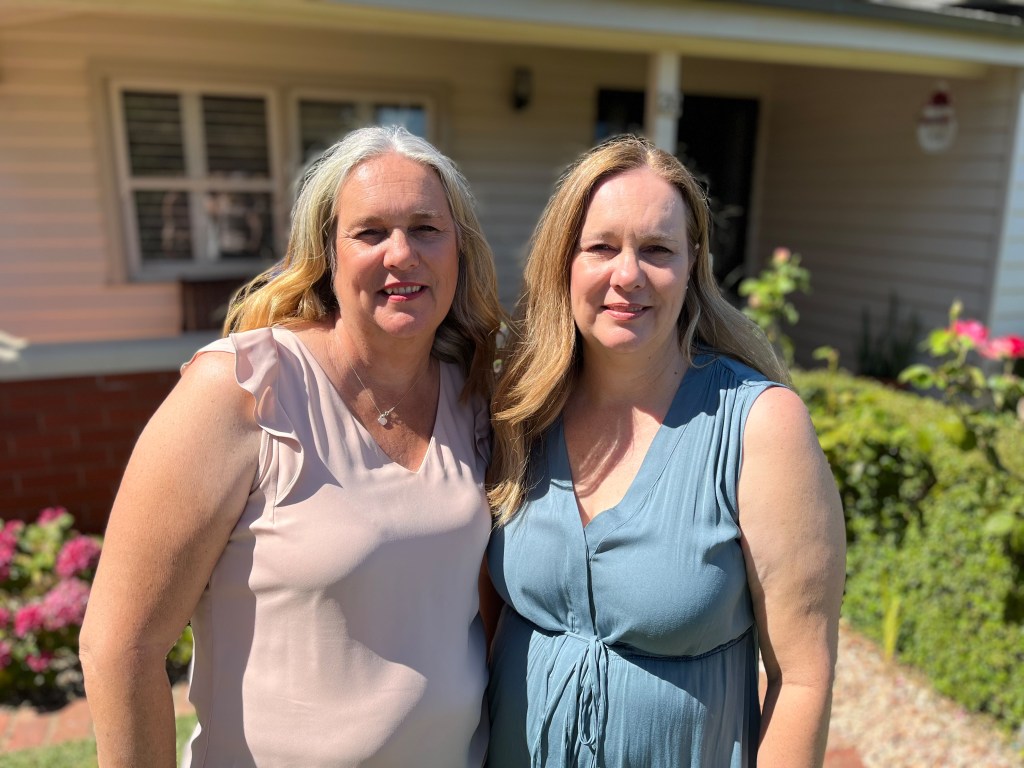
“Our GP said, ‘it’s not if she’ll get breast cancer, it’s almost when’,” Tracey told AAP.
The mother of three was diagnosed during the height of the COVID-19 pandemic in June 2020 after finding a lump in her breast tissue.
Within nine days, Tracey had a biopsy, a mammogram, an appointment with a breast surgeon, and her first lumpectomy.
She went under the knife twice in two weeks, but the cancer persisted so she had a mastectomy.
After 14 months of breast cancer treatment and 12 rounds of chemotherapy for a secondary cancer, Tracey is now more than four years cancer-free.
You might like


But Tania’s health weighs on her mind.
“Almost one-in-three women will get breast cancer, but being identical twins, our genetics are the same, so it is when,” Tracey said.
“I worry all the time. I worry she’s going to have that mammogram and it’s going to come back positive, and we’ll both have to go through it all again.”
A new breast cancer study involving twins will aim to uncover the factors potentially playing a role in increasing the risk of the disease.
Stay informed, daily
Led by University of Melbourne epidemiologist John Hopper, the study is aiming to understand the impact of genetics and lifestyle in identical twin sisters.
“Twins allow you to get an insight into both genetic and non-genetic factors,” Prof Hopper told AAP.
“Genetic factors, because there are (identical and fraternal) twins, and non-genetic factors because twins are a great match in terms of age, sex, genetic and other factors.”
About 2000 pairs of twin sisters without breast cancer and 100 pairs with the disease will be recruited, which Prof Hopper said could be the biggest study of breast cancer factors worldwide.
Combining information gathered from mammograms analysed by artificial intelligence, DNA extracted from blood and personal questionnaires, the work will calculate a patient’s personal cancer risk score.
“Mammogram screening is supposed to detect cancers early,” Prof Hopper said.
“We can actually have early detection of that early detection by using AI to help us find women who are starting to develop what the computer can see as signs of a cancer before the radiologist can see.”
About 3200 Australians die every year from breast cancer, making it the second most commonly diagnosed cancer in the nation.
A breakthrough could spell massive benefits for women everywhere, including Tracey’s twin sister.
“Early early detection can get (the mortality rate) down to zero because the smaller the lump is or the less invasive that cancer is,” she said.
The study, funded by the National Breast Cancer Foundation is looking to recruit twin siblings at www.twins.org.au.
Want to see more stories from InDaily Qld in your Google search results?
- Click here to set InDaily Qld as a preferred source.
- Tick the box next to "InDaily Qld". That's it.



