How a boy with a knife exposed the problems ahead for multicultural Australia
Two shocking acts of violence have shone a light on Australia’s unsteady path to multiculturalism, writes Michelle Grattan
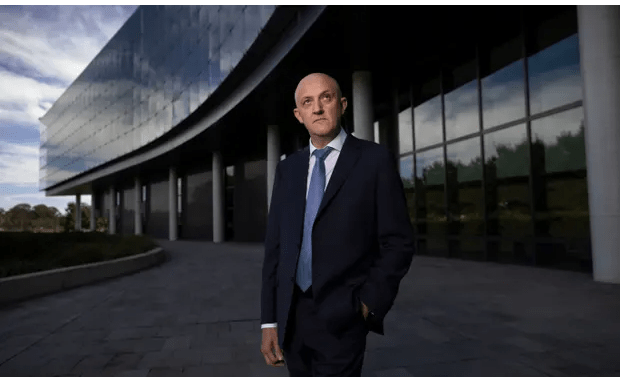
When ASIO boss Mike Burgess delivered his annual threat assessment earlier this year, he stressed the rising danger posed by espionage and foreign interference.
“In 2024, threats to our way of life have surpassed terrorism as Australia’s principal security concern,” he said.
But ASIO also remained concerned about “lone actors” – individuals or small groups under the radar of authorities with the potential to “use readily available weapons to carry out an act of terrorism”.
It was a concern “across the spectrum of motivations – religious and ideological”.
With minor variations, Burgess might have been describing what allegedly happened at Sydney’s Wakeley Assyrian Orthodox Church on Monday night, where Bishop Mar Mari Emmanuel was attacked with a very “readily available weapon” – a knife.
Monday’s incident would have set off shock waves in ordinary times, especially given it was followed by an ugly riot as angry locals converged on the scene, trying to get at the alleged perpetrator, a 16-year-old boy.
In this case, the fear the attack triggered was dramatically heightened by context.
Tensions, especially in western Sydney, are much elevated because of the Middle East conflict. And the Wakeley attack came just two days after the Bondi Junction shopping centre stabbings, which killed six people. While that atrocity did not fall under the definition of “terrorism”, inevitably the two incidents were conflated by an alarmed public.
You might like
The mix, further stirred by incendiary social media, increases the difficulty of keeping a sense of proportion about the church incident, which isn’t the first instance of a terrorist act in Australia and presumably won’t be the last.
We don’t know the background of the attack on the bishop. We do know that the wider pressures on our social cohesion – including dramatic rises in antisemitism and Islamophobia – are deeply troubling. Australia’s multiculturalism is enduring unprecedented strains, with all the difficulties that brings for political and community leaders.
When there are security crises, terror-related or not, the default call is, not surprisingly, for authorities to DO SOMETHING. More police (or security guards). Greater law enforcement powers. Tougher penalties. New controls on social media. (After the church incident, the eSafety commissioner ordered tech companies to take down images of the attack. These were widely available, because the church service had been live-streamed.)
Sometimes calls for action may be warranted, but often they’re little more than a knee-jerk response – and can open other debates (for example, over the justification for censoring certain images but not others).
The challenge for political leaders is not just dealing with the immediate increasing threats to cohesion, but with longer term policy.
Prime Minister Anthony Albanese recently flagged, when he met a Jewish youth group, that the government planned to appoint an envoy against antisemitism (a post existing in other countries) and a matching envoy against Islamophobia. There’s no timetable for these appointments.
Looking to the future, what’s unclear, given the present tensions, is the likely trajectory of Australia’s multiculturalism.
Will the strains worsen, seriously fracturing the society? Or will they ameliorate in the years to come? Multiculturalism is likely in transition, but what will be its pathway? And what are the political implications?
Labor is particularly worried about the erosion of its support among Muslim voters in western Sydney seats.
The cat was belled on the suburban multicultural vote in 2022, ironically not by a Muslim candidate but a Christian of Vietnamese heritage. Dai Le, whose family fled the Vietnam war, seized the previously safe Labor seat of Fowler in Sydney’s outer south-west.
Stay informed, daily
It remains to be seen whether this is a one-off, or if more strong independent candidates will start to emerge as people from multicultural communities fight for a bigger direct presence in politics, or to exert more influence through strategic voting.
A recently-registered group called Muslim Votes Matter styles itself as “shaping our future through informed voting and collective influence”. It says on its website, “There are over 20 seats where the Muslim community collectively has the potential deciding vote”.
Kos Samaras, from the RedBridge Group, a political consultancy, says “the fire” has been raging for some years in multicultural communities in areas such as north-western Melbourne and western Sydney. The Israel-Hamas war has obviously fuelled it.
Samaras says the Muslim political alienation from the major parties has been strongest among members of the those communities who were born in Australia – people in their 20s, 30s and 40s.
This week, after the church attack, NSW premier Chris Minns called in faith leaders. But it is a moot point whether this consultation with predominantly older people reaches the younger, more alienated generation.
Young Australian Muslims grew up in a post-September 11 world, Samaras says, with a sense of being outsiders in the country. We saw this feeling during the pandemic, in the complaints about the different treatment of people in Sydney’s eastern and western suburbs.
Notably, Muslim community leader Jamal Rifi, speaking this week to Sky on behalf of the 16-year-old’s family, referenced the fact the Bondi Junction killings were not labelled “terrorism” by the authorities while the church incident was. “I understand there is a difference between the two but unfortunately the overwhelming feeling in the community [is] that it is, you know, Tale of Two Cities,” he said.
Andrew Jakubowicz, emeritus professor of sociology at the University of Technology Sydney, highlights the three separate elements of multiculturalism. These are
“Settlement policy, which deals with arrival, survival and orientation, and the emergence of bonding within the group and finding employment, housing and education
“Multicultural policy, which ensures that institutions in society identify and respond to needs over the life course and in changing life circumstances, and
“Community Relations policy, which includes building skills in intercultural relations, engagement with the power hierarchies of society and the inclusion of diversity into the fabric of decision-making in society – from politics to education to health to the arts.”
Australia has been fairly good at the first, not so good on the second and “very poor” on the third, he says.
The Albanese government last year commissioned an independent review of the present multicultural framework. The report has recommendations for the short, medium and long terms. It envisages changes to institutions as well as policies and at federal and state levels.
Although the review is not due for release until mid-year, the May budget is likely to see some initiatives.
But there are differences between ministers about how far and how fast reform should go. A febrile combination of local and international factors is making crafting a multicultural policy for the next decade a much more sensitive operation than might have been envisaged when the review was launched.
Michelle Grattan is a Professorial Fellow at University of Canberra. This article first appeared in The Conversation and is republished here under Creative Commons Licence
Want to see more stories from InDaily Qld in your Google search results?
- Click here to set InDaily Qld as a preferred source.
- Tick the box next to "InDaily Qld". That's it.