Voice referendum failed because most voters believed it would create division
Australians rejected an Indigenous voice to parliament largely because they thought it would divide the country.
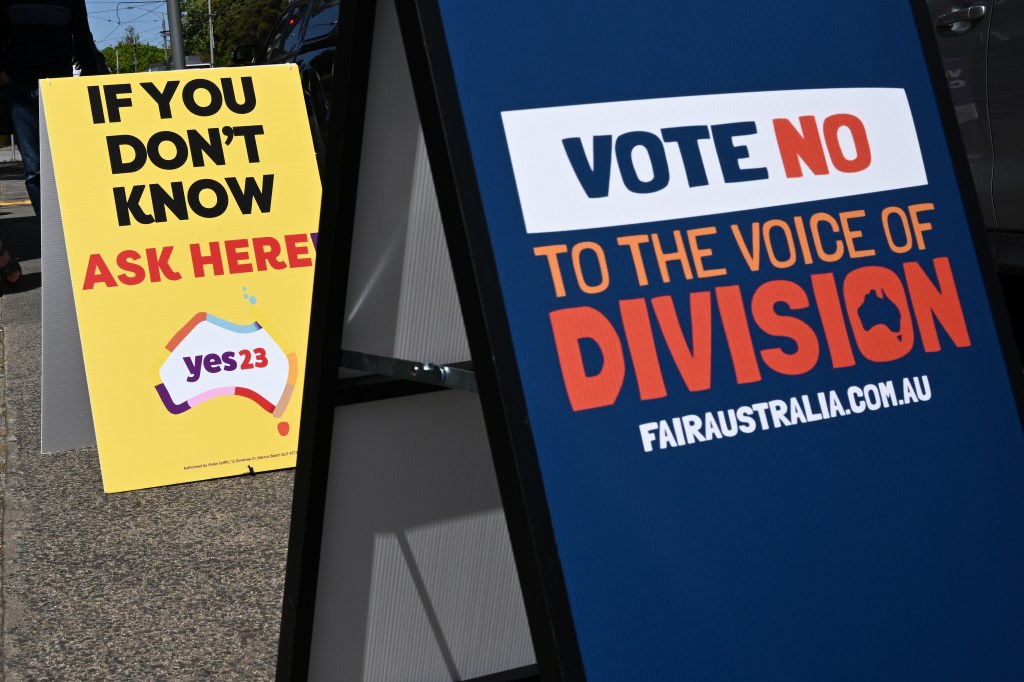
An Australian National University (ANU) survey that’s tracked 4200 voters since January found voters bought the ‘no’ campaign’s message the voice would “racially divide” the nation, with people “sceptical of rights for some Australians that are not held by others.”
That’s despite 87 per cent of respondents thinking First Nations people deserve a voice, suggesting the proposed model at the referendum was what brought it undone.
Three-in-four (76 per cent) ‘no’ voters thought Indigenous people deserved a voice on key policies and political decisions, the study found.
“All the data suggests that Australians think Aboriginal and Torres Strait Islander Australians continue to suffer levels of disadvantage that is both caused by past government policies and that justified extra government assistance,” the study reads.
“They did not see the voice model put to them as the right approach to remedy that disadvantage.”
You might like


Two-in-three ‘no’ voters listed dividing the nation as the key reason behind their decision.
‘No’ voters were more likely to be male, have a low level of education, live outside a capital city and live in a low-income household.
The study found five per cent of people who said they’d vote ‘no’ in January switched sides to ‘yes’ over the course of the campaign.
Alternatively, a whopping 42 per cent of ‘yes’ voters from January flipped to ‘no’.
Stay informed, daily
“Compared to the start of the year, Australians are far less satisfied with democracy, less confident in the government, less satisfied with the direction of the country, and less satisfied with their own life,” the study reads.
“Not all of these changes can be attributed to the referendum. However, these changes have been greater for those who voted ‘yes’ than those who voted ‘no’.”
More than 80 per cent of those surveyed believed Australia should “undertake a formal truth-telling process to acknowledge the reality of Australia’s shared history”.
The federal government had committed to truth-telling, although it is unclear if that remains the case after the failed voice referendum.
Indigenous Australians Minister Linda Burney said last week conversations in Aboriginal communities had convinced her of a desire for a formal truth-telling process.
Greens senator Dorinda Cox said truth-telling was a must, suggesting Indigenous justice could only be found with a full appreciation of “Australia’s brutal history”.
“We need to rip off the scab off colonisation and expose the deep wound of intergenerational trauma … and how that impacted and continues to impact where we are now as First Nations people and as a nation,” she told AAP.
“People need to see the historic reality of multiple massacres, assaults, enslavement and oppression that First Nations people endured and link that with the deep trauma it caused and still does.”
Senator Cox called for “political will and guts” to establish the formal process.
Want to see more stories from InDaily Qld in your Google search results?
- Click here to set InDaily Qld as a preferred source.
- Tick the box next to "InDaily Qld". That's it.



