Yes case in a nutshell: Voice will unite nation and save taxpayers money says Albo
An Indigenous voice to parliament would bring people together, not divide the nation, and would save taxpayers money, the prime minister said.
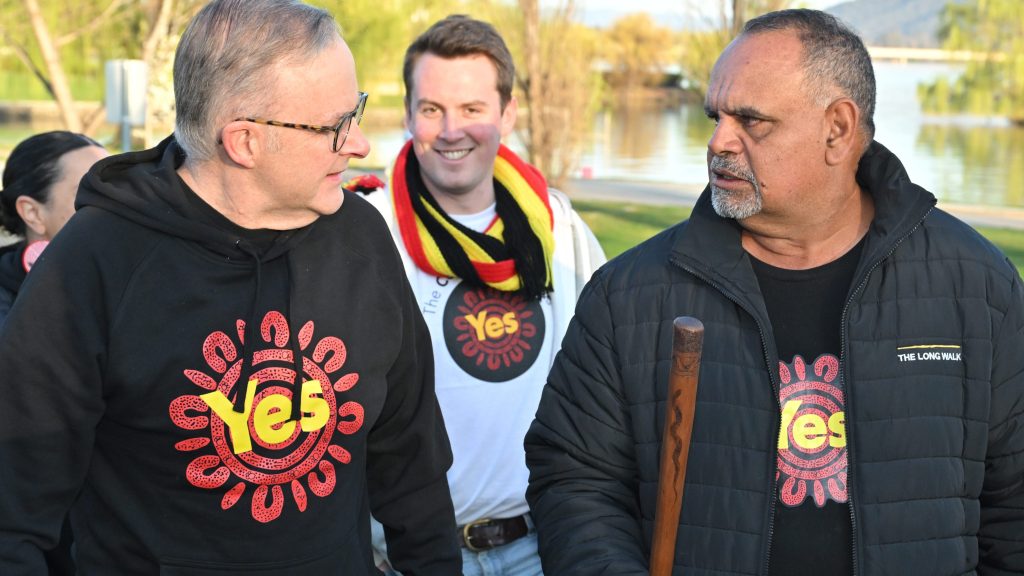
There was a lot of misinformation about what the voice would do and what it would cost, Albanese said on Friday.
“This will actually save money,” he told Brisbane radio station B105.
“What you’ll get if we listen to people is more efficiency, you’ll get the dollars going to where they should go.
“This is about helping a group of Australians – three per cent of Australians – it won’t have a direct impact at all on non-Indigenous Australians directly.”
Asked by a listener whether creating a specific body for Indigenous Australians in the constitution would divide the nation, Albanese said it would not.
“The idea of this is to work together to bring the country together,” he said.
You might like


“If it comes up with a good idea, then governments should adopt it … when we listen to people who are directly affected by an issue, we get better outcomes.”
But Opposition Leader Peter Dutton continues to argue the voice proposal lacks detail and that people who want to help Indigenous Australians will be forced to vote ‘no’ if their questions go unanswered.
“It just makes people, I think, more reluctant – tradies and others who are saying, ‘I want to help Indigenous people but the prime minister is not putting the detail out there, so I don’t understand it, I am not voting for it’,” he told Nine’s Today program.
If the referendum is successful, the voice would be a permanent but non-binding advisory body that would be able to make representations to the parliament and the government.
Former High Court chief justice Robert French will address the National Press Club on Friday on the voice.
Mr French has previously dismissed arguments a voice could be subject to multiple legal challenges, declaring it “constitutionally sound”.
Stay informed, daily
He’s also labelled legal arguments around the voice as “a shadow which distracts from the substantive”, stating the High Court would likely consider the intent of the parliament when making any rulings.
“Put shortly, the voice provision provides for the recognition of Aboriginal and Torres Strait Islander peoples, not as a race but as the First Peoples of Australia,” he told parliament earlier this year.
“That provides a significant shift away from the existing race-based legislative power that the Commonwealth has.”
But the argument didn’t fly with Liberal senator Kerrynne Liddle who said legal minds had differing views about the broadness of the wording.
“What was really clear from (a parliamentary committee) was that the risk seemed to be unquantifiable,” she told ABC TV.
The concerns were ignored by Labor who proceeded with the same wording anyway, the South Australian senator argued.
“It is not just the question that people are being asked, it is about the impact of the words on the Australian constitution and by default, the Australian people,” she said.
Some state and territory leaders will also gather in Adelaide in a show of unity for the voice.
The voice referendum will be held on October 14.
Want to see more stories from InDaily Qld in your Google search results?
- Click here to set InDaily Qld as a preferred source.
- Tick the box next to "InDaily Qld". That's it.



