Huge pool of 100,000 housing blocks left vacant as builders pull stumps
Queensland councils have approved 100,000 housing lots that were as yet undeveloped, according to the Local Government Association of Queensland.
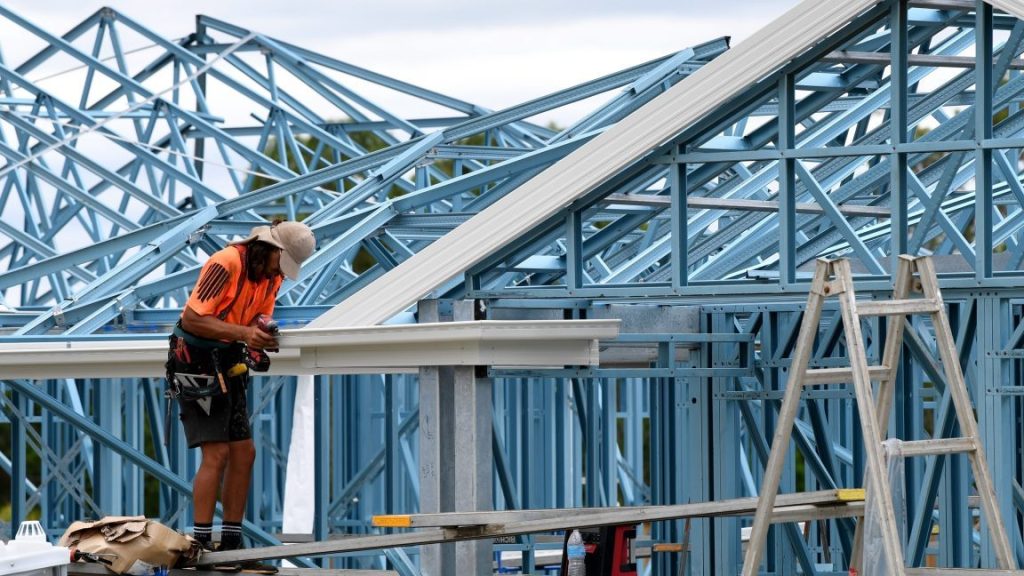
The LGAQ has called on the State Government to help support the building sector to activate the blocks, however builders are still facing labour shortages and are recovery from the inflationary spike that hit building materials earlier this year.
Chinese developers have also pulled out of Australia to deal with a worsening property crisis at home where developers are liquidating assets, according to SQM Research.
Developers and building companies were also leaving Queensland to work for higher margins interstate, according to the property industry. There have also been concerns that the State Government’s infrastructure drive will further deplete the labour pool.
LGAQ chief executive Alison Smith said there were 100,000 blocks sitting idle because of the rising costs and labour shortages.
“Councils and communities and the development sector obviously want to see more homes built and these development approvals activated in order to help alleviate and current housing crisis,” Smith said.
“The latest figures from March 2023 show there were 85,777 hectares of available land suitable for residential development in Queensland and 29,086 hectares across southeast Queensland, which would open up 589,150 homes across the state, including 386,693 in southeast Queensland.
“These figures are proof councils are doing their job to facilitate land for housing, but the other obstacles need to be removed to activate construction and get more people into more homes.”
You might like


The State Government has been asked for comment.
It follows news this week that interstate developers were packing up and leaving Queensland because projects no longer stacked up and the Government’s infrastructure drive was only adding to problems.
Director of National Property Research Matt Gross also said the Government was warned in 2016 that there would be labour shortages in the sector.
“Of serious concern is that southern developers are now starting to pack their bags and head back interstate as they can’t get projects to stack up in Brisbane,” he said.
“They are no different to local developers in that respect. The build costs are the same whether you are local or otherwise. However, when the build costs are not markedly different between the east coast capitals and the prices are higher in Sydney and Melbourne, then the money flows to where the most profitable outcome is.
“With the current demand and vacancy rates being what they are right now, there should be a crane on just about most corners in inner Brisbane.
“However, the risk is being transferred from builders to developers and private developers invariably can’t take on a cost-plus contract.
“Another important factor is that we don’t have the quantum of builders in Brisbane compared to Sydney and Melbourne so capacity constraints are real and the State Government in it’s infrastructure drive, particularly (in) Health is also adding to the pressure.”
Stay informed, daily
The Australian Constructors Association recently said building firms were entering administration at more than twice the rate of other industries, profit margins have fallen from around 3 per cent to below 1 per cent and liquidity has collapsed from 15 per cent to below 5 per cent.
The Association of Professional Builders co-founder Russ Stephens said that didn’t mean those companies were technically insolvent because they could still pay bills when they fell due.
“That’s how these companies are skirting around the outside of it. Because when they have more cash coming in they can pay their bills even though their liabilities exceeded assets.”
Stephens said he had never seen a situation as bad as the current one.
“You could see it coming but unfortuntely a lot of companies got wrapped up in the opportunities for sales and not considering the consequences.
“If the sales hold up the building companies, especially the large ones that have destroyed their equity, are going to keep going because it’s a bit like a construction Ponzi scheme where new inflows pay old debts.”
He agreed with concerns in other parts of the industry that the Government’s infrastructure plans were going to hurt the private sector and leave builders scrambling for workers.
“It’s a sector that is already struggling with a labour shortage. It’s all very well to be setting targets of all these homes that need to be built but what are you doing about it.
“There is not enough going to ensure that the building companies that are being set up are viable. They are turning a bling eye and that has been happening in this industry for decades.
“That’s not helping the industry in the long term. We need strong, financially viable companies operating in residential.”
Want to see more stories from InDaily Qld in your Google search results?
- Click here to set InDaily Qld as a preferred source.
- Tick the box next to "InDaily Qld". That's it.



