Bare Knuckles: The shattering, inspiring journey of former Wallabies coach John Connolly
In the blink of an eye John Connolly went from Queensland and Australian rugby legend to a spinal ward patient. But the man they call “Knuckles” is tackling his new life as he did before – front on, writes Michael Blucher
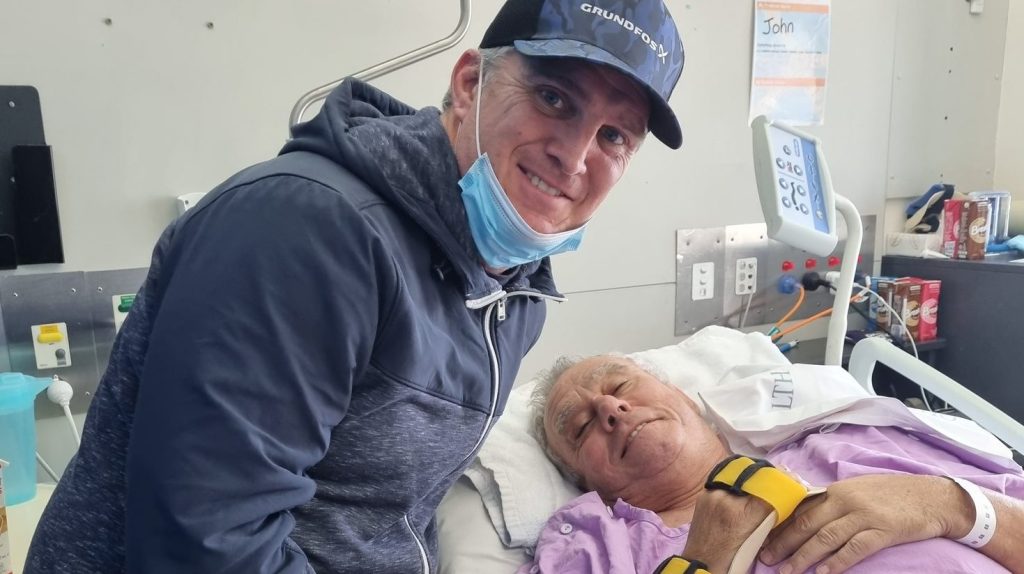
Just over a year ago, one of the Queensland’s most successful elite sport coaches began his new life, a life far removed from the spotlight and fanfare of the comfortable semi-retired, rugby centric world in which he’d long thrived.
Nobody saw the cataclysmic change coming, least of all John Connolly.
Up until 9.30am, August 1, 2021 had been just like any other casual Sunday morning. The former Reds and Wallaby coach was at his elderly father’s house in Brisbane’s northern suburbs, catching up, drinking coffee and not unusually, chatting on his phone.
Then, crunch. Standing on the boundary of the property, the long serving Reds mentor leant on a post which gave way. A split second later, John Connolly was lying in agony on concrete two metres below, the right side of his body – arm, shoulder and ribs – crumpled by the fall from a retaining wall, awaiting the addition of a new fence.
Amid all the excruciating pain, it was not being able to move his legs that caused him greatest concern. In the process of falling, he’d instinctively tried to “roll”, but still landed head first, cracking this neck on the neighbouring driveway.
“Jeez..I’m in trouble here – more trouble than Nick Stiles was up against Olo Brown,” Connolly thought to himself, his mind instantly diverting to one of the more memorable physical mismatches of his Bledisloe Cup coaching days.
Yes, even lying on the doorstep of heaven with a broken neck, John Connolly’s mind defaults to the game they play in heaven. “Knuckles” as he’s best known, is nothing if not one of rugby’s most devoted and single-minded advocates.
Roll forward 24 hours, and Connolly is recuperating in the spinal injury unit of the Princess Alexandra Hospital, about to be updated on the preliminary results of seven hours of emergency surgery.
Predictably, the news was not what he wanted to hear – the fracturing of his C6, C7 and T1 vertebra meant it was unlikely he would ever again have use of his legs. The restricted range of movement in his arms, comparatively speaking, was more promising, but there was no glossing over the truth – he had a long hard road of rehabilitation ahead of him. And there was no guarantee it would lead to any place better than where he was, right there, right then.
You might like


“Lying in hospital staring at a ceiling for nine months, you’ve got a lot of time to think,” he says. “You go through the full gambit of emotions – everything from poor me, why did this happen, to ‘how lucky am I!’ This could have happened when I was 20, not 70 – I’ve had 50 bonus years!
“At the end of day, it is what it is. You can’t change the hand you’re dealt in life – you just have to play the cards you’ve got. You have to find a way to make it work.“
For the ageless 70 year-old father of three, that began with looking around him, in the beds one and two over, across the ward, to the forlorn faces of the “kids”, mere 14 and 15 year olds who, just days before, had been out in the surf, riding their boogie board, or performing tricks in the local skateboard park. And then, with the break of a wave, or the slip of wheel, their world was turned upside down, forever different, forever restricted.
“You didn’t have to look too far to find people a lot worse off than you are,” Connolly says philosophically. “Not just in terms of age and circumstance, but also severity of injury. The young kids with their whole life ahead of them becoming quadriplegics – that’s what breaks your heart.”
Another element of good fortune, the massive support network which almost overnight, marshalled and began mapping out how to best address the inevitably challenging elements of John Connolly’s new life – living arrangements, transport, permanent care – spinal injuries come with consequences that most people readily acknowledge but too few fully appreciate.
That army of helpers began with his wife Jo (a trained nurse) and his immediate family, but quickly spilled out into communities in which Connolly had played such a significant role – rugby and more recently, the Sunshine Coast, where he’s lived and for four years, also served as an elected member of the local council.
For seven months, there was a conga line of hospital visitors, many of them former and current Wallabies, dropping in to say hello and offer their support. A few, “Knuckles” suspects, probably came to satisfy themselves that their former coach was as immobile as had been reported – justice for prematurely ending their playing career!
Tough gig, coaching. As Connolly often acknowledged throughout his 12 seasons with the Reds and two years with the Wallabies, “on any given weekend, 15 blokes think you’re fantastic, another eight tolerate you, and everybody else in the squad thinks you’re a total prick!”
“I’ve rebuilt some bridges, but some are never going to forgive you,” he says. “I’m OK with that. You have to do what you think is right at the time – and in doing that, you’re not going to please everybody.”
One of many multiple visitors at the PA – was former Wallaby great, Toutai Kefu, who just weeks after Connolly’s accident, was seriously injured, fending off machete wielding house invaders who’d broken into his Coorparoo home in the middle of the night.
“Rachel (Toutai’s wife) is still suffering the effects physically, but miraculously, nobody died,“ Connolly says. “Kef’s story is another reminder of how life can turn on a dime. You never know what’s waiting for you around the corner.”
Connolly’s nine months in hospital also provided a confronting insight into the overwhelmed, under-resourced Queensland health care system, where in Covid-strapped times, demand for services continues to outstrip supply in an increasingly alarming and incongruent fashion.
Stay informed, daily
At one point of his stay, only 25 of the 40 beds in the spinal injury unit were occupied, due to the chronic staff shortages – doctors, nurses, physios, occupational therapists, even admin assistances remained in desperately short supply.
In another telling pointer, communication between shifts was conducted via 20th century white boards dotted throughout the wards, rather than through an integrated computer system.
Connolly was so appalled by the facilities and resources he witnessed that, from his bedside, he organised a charity lunch on the Sunshine Coast, to raise funds necessary for 45 new televisions and an upgraded computer system.
As it so often does, the sporting community banded together, with John Eales, Wayne Bennett, Peter FitzSimons, and gold medal winning Paralympian Curtis McGrath all happily donating their time on a boisterous afternoon in April, the gathering tipping almost $90,000 into a specially formed PA spinal unit trust fund.
“Every single person working in the front line of our health service deserves our highest respect,” Connolly says. “What they have to put up with, the levels of bureaucracy they have to deal with day in day out, is ridiculous. But there’s no use pointing the finger. We just have to work towards solutions, to finding better ways, particularly in regards to the nursing profession.”

Since leaving hospital in February, John Connolly has moved back up to the Sunshine Coast, where he and Jo are now living in a modified apartment on the Maroochy River.
His daily routine consists of a series of appointments, most centred around rehab – gym sessions, physio, and OT a few times a week, interspersed with regular coffee catchups at the cafe on the ground floor of his apartment block.
Connolly is under the constant care of three full time nurses who share the load of helping him navigate his way through the day. The hour and a quarter it takes him to get ready each morning highlights the imperative of patience.
He recently bought a specially modified vehicle, though he is some way off driving it himself, warning locals it would best to get off the road when he eventually does. “I can’t imagine it’s going to be flash,” he says. “I’m still smashing into things in the wheelchair, but I’m looking forward to improving.”
That, Connolly says, is the key to his new life, his different life. Looking forward, not back.
Co-incidentally, just a few weeks ago, while sitting in his favourite coffee shop, he bumped into Wallaby skipper, Michael Hooper – fortunately not in his wheelchair, just literally.

The pair got talking. He’d only met the affable but introspective Hooper a couple of times, most recently when he and Rod McQueen, another former national rugby coach, were invited to a Wallaby training camp at nearby Twin Waters – all part of maintaining the rugby alma mater.
Whether Hooper had been aware of “Knuckle’s” accident, remains uncertain. But he stayed for more than an hour, the pair chatting about anything and everything, everything accept rugby.
As Hooper has recently and courageously demonstrated, by standing down from duties in Argentina, Test rugby might be important, but it’s not as important as personal well being.
Perspective is essential. So too, looking forward, not back.
Want to see more stories from InDaily Qld in your Google search results?
- Click here to set InDaily Qld as a preferred source.
- Tick the box next to "InDaily Qld". That's it.



