Stance on transgender swimmers is painful, says Campbell
Australian swim great Cate Campell says it pains her that supporting the sport’s restriction of transgender athletes could infuriate a marginalised community.
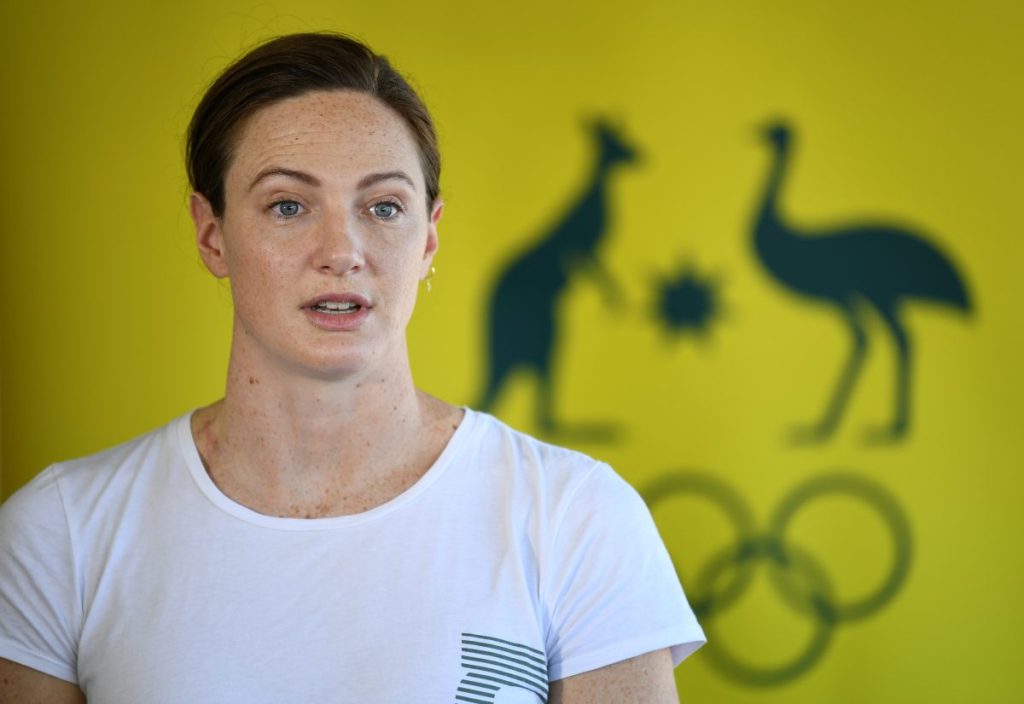
Campbell “wrestled long and hard with myself” before publicly backing the move of swimming’s world governing body FINA.
FINA, at an extraordinary general congress in Budapest during this month’s world championships, voted to effectively ban transgender swimmers from elite women’s competitions.
Swimming is the first Olympic sport to adopt such an edict.
Swimming Australia was among the 152 national swim federations with FINA voting rights to support the restriction. The mandate was passed with 71.5 per cent support.
Campbell, a triple Olympic gold medallist and former 100 metres freestyle world record holder, addressed the FINA congress before the vote on Monday morning AEDT.
“We see you, value you and accept you,” Campbell said, indirectly addressing transgender swimmers.
You might like


“My role, however, is also to stand up here, having asked our world governing body, FINA, to investigate, deliberate and uphold the cornerstone of fairness in elite women’s competition.
“And it pains me that this part of my role may injure, infuriate and, potentially, alienate people from an already marginalised community.
“Believe me, I have wrestled long and hard with myself, with what to say and do.
“I am aware that my actions and words, no matter what I say, will anger some people, whether they are from the (transgender) community or from the cisgender female community.
“However I am asking everyone to take a breath, to absorb before reacting.
“Listen to the science and experts, listen to the people who stand up here and tell you how difficult it has been to reconcile inclusion and fairness.”
Stay informed, daily
Campbell said the FINA policy was created not from “what we felt was the right thing to do’.
“The policy was created with the inclusion of medical professionals, legal professionals, athletes, coaches and people from the transgender community,” she said.
“It is a policy that pays attention to inclusion, but prioritises fairness.
“Ultimately this not about winners and losers.
“It is about investigating and developing a policy which accurately represents the science and draws a line to protect the fairness of the female category distinction in elite sport.”
Under the FINA policy, only swimmers who transitioned before age 12 may compete in women’s events.
FINA also proposed an “open competition category” with a taskforce to examine in the next six months just how to create such a category.
Last March, Lia Thomas made history in the United States as the first transgender woman to win a National Collegiate Athletic Association swimming title, the 500-yard freestyle.
FINA said there were currently no transgender women competing in elite levels of swimming.
Want to see more stories from InDaily Qld in your Google search results?
- Click here to set InDaily Qld as a preferred source.
- Tick the box next to "InDaily Qld". That's it.



