Lowe blow: Reserve Bank misled millions, leaving PM to deal with fallout
The interest rate rise will be a defining issue as we swing into the second half of this campaign. Dennis Atkins looks at what’s happened and what political cost might ensue.
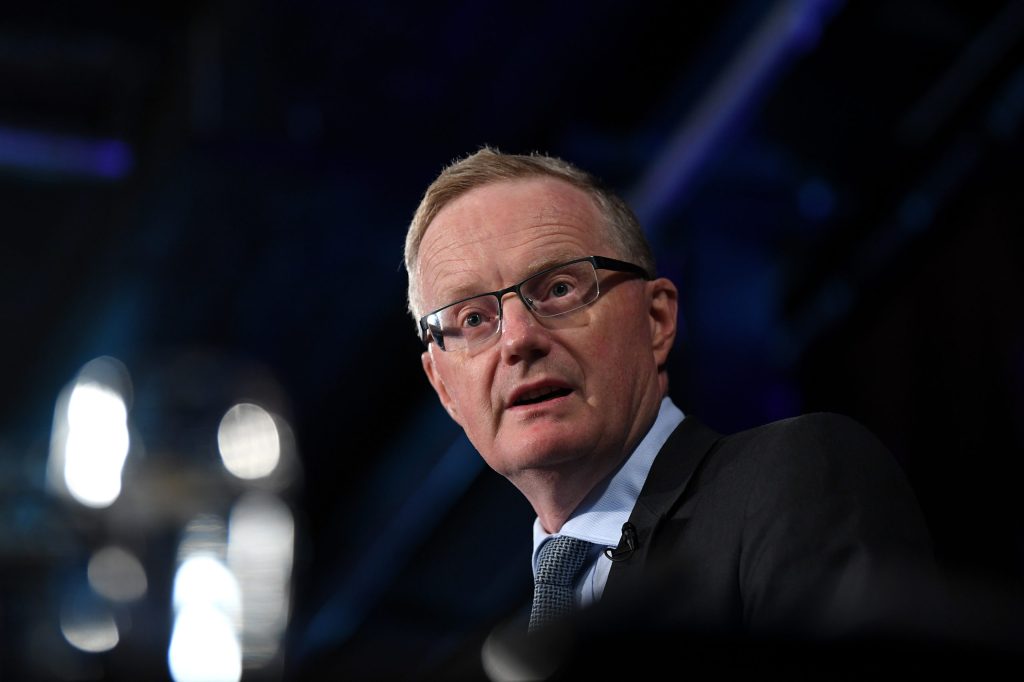
If this was Japan and Phillip Lowe was Haruhiko Kuroda, the Reserve Bank’s governor would have had a very different news conference late Tuesday afternoon.
Lowe was mildly contrite, saying the RBA had made “embarrassing” forecast mistakes and “we should have done better”. But he didn’t do what the Governor of the Bank of Japan would quite probably have done in the same circumstances.
Kuroda would have issued a much more fulsome admission of error and apology. He may have shed a few tears and then he would have offered his resignation.
That’s how they roll in Japan. The same thing would have occurred in South Korea. Here, we don’t do that kind of thing – many take the lead from a prime minister who never admits a mistake and never says sorry.
However, the failure of the Reserve Bank was big enough to be seen by the cameras on the James Webb Space Telescope sitting half way between the Earth and the Sun.
Lowe said at the beginning of the pandemic (just two years ago) the bank’s guidance for borrowers was towards a cash rate remaining at 0.1 percent until “at least” 2024.
You might like


Just six months ago he brushed aside market suggestions of a series of rate rises this year as a “complete overreaction” to what we knew about inflation.
It wasn’t until February this year – just two months ago – Lowe had to climb down and grudgingly admit a rate rise was “plausible”. Note the descriptor and also note the fact he was talking about a single rise.
Thousands – perhaps hundreds of thousands – of Australians (many usually quiet) made commitments based on what Lowe said with the tacit endorsement of Scott Morrison and Josh Frydenberg.
They bought houses, sometimes worth five or six times their annual income, and they borrowed against their mortgages for extensive renovations.
They might have built a buffer into their commitments by getting ahead on repayments but most of what was done was based on the “guidance” from the Bank, tacitly supported by the government.
Now they have woken up to be told they will have to find an extra $85 a month on average right away to meet mortgage repayments and around $400 a month more by Christmas.
Stay informed, daily
The floor under those Christmas trees is going to look pretty bare.
Scott Morrison thinks he can market-speak his way out of this – saying there’s “a shield” to protect everyone from what’s happening in the United States, Canada and just over the Tasman in New Zealand.
Morrison might get away with it but the odds are against him. His slick slogans no longer have the previous salience and, if anything, are counter productive because many voters see it as more of the same or, worse, “bull”.
Mortgage stress is a real issue in Australia – it’s been out and about for decades – and right now it’s at the highest levels ever, being felt keenly among those 1.2 million home buyers who have never felt a rate rise.
When the RBA last hiked rates during an election campaign – in 2007 as John Howard faded into the sunset – the percentage of houses paying more than 30 percent of their income to repayments was one in five, across all electorates.
Today mortgage stress is felt by more than one in two home buyers in many electorates with more of those impacted in the Labor column than on the Coalition’s side of the ledger.
Morrison’s plaintive hope is enough Australians will stick with and restore faith in the Coalition’s traditional brand strength on economic management. He wants to use economic management to protect his seats and scare some wavering voters in Labor seats over his way.
There is still some gas in the economic management tank but it has dropped markedly from the heights of the Howard and Peter Costello years, due in recent years to Morrison’s exposure as someone who can’t be easily trusted and because a greater number of people don’t regard him as sharing their ambitions.
If he’s true to form, Morrison will take the tear-it-down road to win this argument. He will look for advantage by trashing Anthony Albanese. It’s his only hope but the way this election has tracked so far, it’s very high risk. Just like everything else.
A note: in a diary column on polling last week I questioned the lack of methodology transparency by some pollsters, including Newspoll and its owner YouGov. I said it was hard to find the details behind Newspoll working from The Australian’s tablet website.
The good folk at YouGov have explained how to navigate their website. Now my technology-challenged mind has seen the errors made. Newspoll/YouGov’s material is gold standard, better than anyone else with the only firm in the ballpark being Ipsos.
You can get the short and long methodology details for recent YouGov polls here: https://au.yougov.com/news/2021/05/18/apc/. Happy to set the record straight and apologies to YouGov for being all thumbs.
Want to see more stories from InDaily Qld in your Google search results?
- Click here to set InDaily Qld as a preferred source.
- Tick the box next to "InDaily Qld". That's it.



