The hippie billionaire who is putting his money where his mouth is on climate change
Mike Cannon-Brookes is refusing to go away. His rejected joint tilt with Brookfield for AGL probably wasn’t the last.
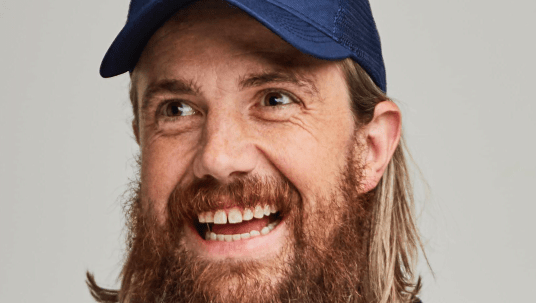
While it’s not normal for someone to buy a company with a strategy of shutting down the core assets, it’s not completely mad. This is a play that is betting on the massive amount of transformation needed to decarbonise economies.
It was Cannon-Brookes who, in 2017, challenged Tesla’s Elon Musk into developing the South Australian battery in 100 days and lost the bet.
His strategy through his privately owned Grok Ventures and Brookfield is to bring forward the closure of AGL’s Bayswater and Loy Yang coal-fired power stations by 2030.
But that’s just a start. Beyond the acquisition, the consortium has a pot of $20 billion to spend on creating new renewable assets, Cannon-Brookes told ABC Radio National.
The $8 billion offer for AGL was pitched at $7.50 a share, a low-ball bid by any reckoning. It was a 4.7 per cent premium to AGL’s price on Friday and few companies would hand over the reins for that sort of money. The consortium is now considering its options.
But the Federal Government, which has previously pitched the idea of building a coal-fired power station in Queensland, has an ace in hand in this game and could be keen to play it.
Analysts at RBC Capital Markets said the Government would have concerns with the earlier than previously planned retirement of base load, coal-fired power generation, and the potential for this to lead to a gap in reliable generation in the wholesale electricity market.
“We assume the Brookfield and Grok proposal will replace this coal-fired, base load with intermittent renewable power generation backed by batteries and therefore it could lead to increased volatility and higher electricity prices,” RBC said.
You might like
“In response to the Origin Energy proposal for the early closure of Eraring, Angus Taylor, the Minister for Industry, Energy and Emissions Reduction, has stated that “dispatchable, on-demand capacity is critical to keep prices low and the grid reliable. Closure without like-for-like replacement puts affordability and reliability at risk.” Could this lead to grounds for an FIRB-based rejection of the Brookfield and Grok bid?”
But Environment Minister Sussan Ley said she did not want rapid decarbonisation to be at the expense of everyday standards of living and a carefully mapped out transition plan.
“You have to be careful about saying energy prices won’t go up because unless you have price parity with current energy technologies, they will,” she told ABC.
“We do have a $21 billion road map that leads us to low emissions technologies.”
Cannon-Brookes said Australia could have the cheapest power prices in the world using renewable energy sources and storage.
“We don’t need to invent new technology. We will go do it,” he told 9News.
“They should be big fans of the plan.”
“We’re doing what the government has asked us to do: provide replacement capacity, bring $20 billion in private capital to do that and reliably bring people’s bills down.”
The Australian tech billionaire also rejected criticism from Treasurer Josh Frydenberg that the plan would cause prices to spike and make the grid unstable, as occurred when the Hazelwood brown coal plant suddenly closed in Victoria’s Latrobe Valley.
“He’s entirely correct. He’s just leaving out a few facts,” Mr Cannon-Brookes said.
Stay informed, daily
Energy firms now need to give a minimum three-and-a-half year notice of closure, and technology has advanced and become cheaper.
“All he said about reliability and price is exactly what we are planning to do. That is our plan. We are in 100 per cent agreement,” Cannon-Brookes said.
The consortium said it was committed to working with all stakeholders and regulators to ensure the transition was achievable. It said electricity prices would be forced down, rather than up by the deal.
“Serving the company’s customers will remain the primary focus, and as such, thermal capacity will not be taken out of the system until it has been replaced by renewables and storage to ensure network and pricing stability and reliability,” a statement by Cannon-Brooke’s Grok Ventures and Brookfield said.
Some 10,000 jobs could be created by the takeover, according to Cannon-Brookes.
So why would a company like Brookfield see any benefit in such an idea?
For a start, the Canadian company which has about $US680 billion in assets under management is a significant player in Australia and oddly enough owns a major stake in the Dalrymple Bay coal terminal in Queensland. So, it’s not totally opposed to coal.
It also made a bid for Virgin and has other investments here, including Ausnet.
The plan would be to replace 7 gigawatts of AGL’s current capacity through “a build-out” of at least 8GW of clean energy and storage. That’s where Brookfield’s asset management comes in.
Brookfield Managing Partner and Asia Pacific chief executive Stewart Upson said the consortium would “prioritise customer power reliability and prices.”
“We have a defined plan to significantly rationalise AGL’s most carbon-intensive thermal assets once we have replaced its capacity through the execution of a large-scale renewable build-out, supported by an identified project pipeline,” he said.
Cannon-Brookes is considered to Australia’s third richest person with a fortune of about $33.5 billion.
He has committed to spending $1.5 billion of his family wealth on climate change philanthropy and green investments over the next decade and has backed the $30 billion plan by Sun Cable to power Singapore using a solar farm in the Northern Territory.
It’s also backed home solar fintech Brighte.
His wealth was creating mostly through Atlassian which he co-founded with Scott Farquhar.
Want to see more stories from InDaily Qld in your Google search results?
- Click here to set InDaily Qld as a preferred source.
- Tick the box next to "InDaily Qld". That's it.