Queensland falls behind, tipped to miss 2030 renewables target
Queensland won’t meet its climate change target of reaching 50 per cent renewables by 2030 and would lag well behind the other major states, according to a Federal Government report.
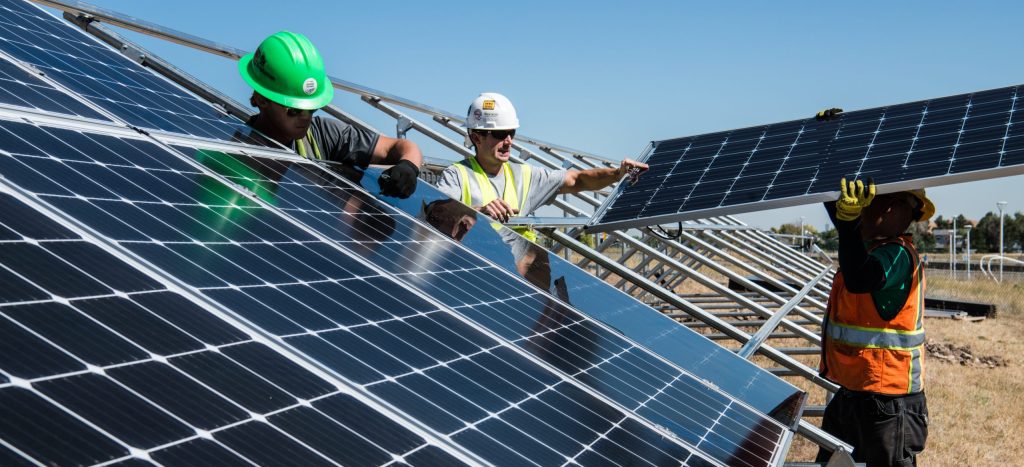
The report from the Department of Industry shows Queensland would get to only 43 per cent of renewables by 2050 while NSW would reach 84 per cent and Victoria 61 per cent. South Australia would be almost completely renewable-reliant while Tasmania would easily reach 100 per cent renewables because of its hydro industry.
A separate report from advocacy group Solar Citizens also claimed Queensland was lacking the ambition of the southern states.
“The Queensland Government has set no target for the amount of new renewable energy generation they are aiming to unlock in the state’s Renewable Energy Zones, which means some regions are likely to miss out on renewable jobs and investments,” Solar Citizens said.
NSW and Victoria have targets of 12,000 megawatts and 10,000 megawatts respectively.
The Federal Government report also indicated that nationally, Australia would have almost 70 per cent of its electricity generation sourced from renewables by 2050.
You might like

While Solar Citizens said the State Government had been making efforts to tackle the challenge and as of 2019 its emissions were 14 per cent below 2005 levels “there’s still a long way to go to reach the existing 2030 target (30 per cent below 2005) and then go beyond that for the 2032 Olympics”.
“Despite being promised, we’re still yet to see a full Climate Action Plan that details how the Government will meeting the interim 2030 target of 30 per cent emission reduction compared with 2005 levels,” Solar Citizens said.
“Burning coal is the single biggest contributor to climate change and yet some of the state’s coal stations are slated to run past 2050. This is not aligned with the zero net emission by 2050 target.”
Energy Minister Mick de Brenni said Queenslanders had been leading the way with renewables and 40 per cent of Queensland homes now had solar on their roofs, which made it the state’s largest electricity generator.
Stay informed, daily
“There are now solar systems pumping over 3700 megawatts of power into the grid,” de Brenni said.
“Work is also well underway on the Queensland Energy Plan – a roadmap to meet the Palaszczuk Government’s renewable target by 2030, to enable more jobs through cheaper, cleaner electricity and to become an export superpower in hydrogen.
“There are currently 34 large-scale Queensland renewable generators powering the National Electricity Market with over 2500 megawatts of renewable energy capacity and there’s another 3100 megawatts of projects which are financially committed or under construction.
“In total, these projects make up 5600 megawatts which has enabled more than $10 billion in investment since 2015.
“And this investment is projected to continue.”
He said a recent call for companies to register interest in investing in the Northern, Central and Southern Queensland Renewable Energy Zones resulted in 192 renewable projects making submissions.
“This included wind, solar, hydro and storage technologies, representing over 60,000 MW of renewable energy potential, around $90 billion of investment and thousands of jobs,” he said.
“Under the $2 billion Queensland Renewable Energy and Hydrogen Jobs Fund, we are enabling our Government-owned energy corporations to increase investment in commercial renewable energy and hydrogen projects, along with supporting infrastructure, in partnership with the private sector.”
“We welcome Solar Citizens’ passionate support for renewables, but they also know we are getting on with the job.”
Want to see more stories from InDaily Qld in your Google search results?
- Click here to set InDaily Qld as a preferred source.
- Tick the box next to "InDaily Qld". That's it.