Buried treasure: How to look beyond the good news in government annual reports
There’s a very fine art in writing – and reading – government agency annual reports. Robert MacDonald explains
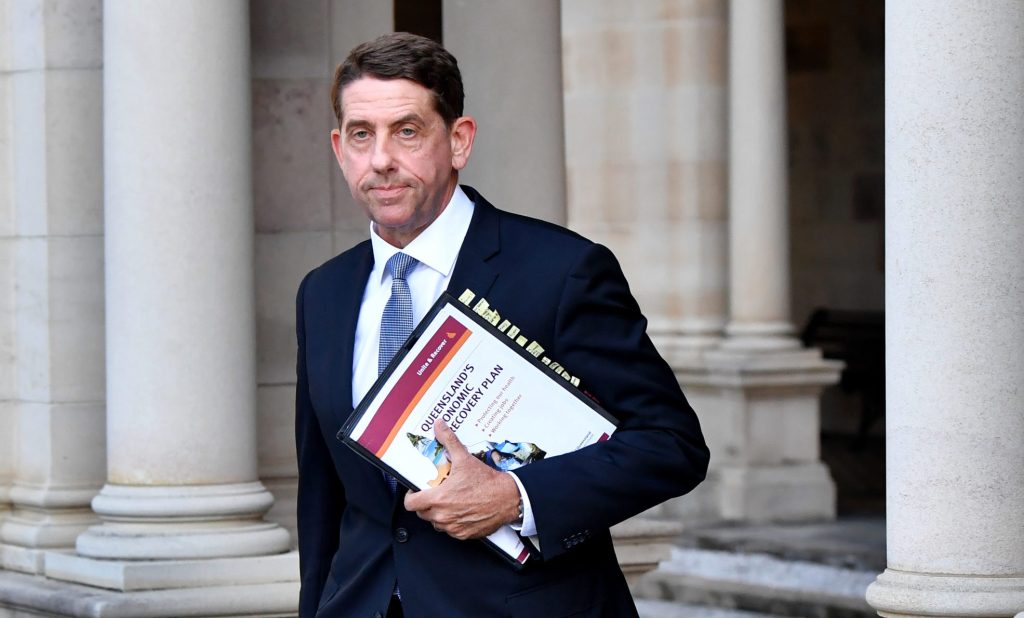
Queensland Health has decided it might need to write off nearly a third of the $180 million it charged people for locking them up in hotels last financial year.
The department’s latest annual report shows it made a $54.5 million provision for “doubtful debts relating to quarantine fees recognised during 2020-21”.
The Transport and Main Roads Department’s annual report reveals the state lost an estimated $173 million in public transport revenue last financial year, thanks to COVID-19, which also added $13 million in cleaning costs.
Just a couple of the nuggets of Information tucked away in the dozens of state government agency annual reports released in the last few weeks.
There’s a fine art to writing and reading government annual reports. I know. I’ve written a few over the years, and reported on many.
The State Government publishes a document each year titled, “Annual report requirements for Queensland Government agencies”.
It lists all the things you have to include in the report — from “agency objectives and performance indicators” and “organisational structure” to the agency’s activities in terms of “Queensland public service values” and “public sector ethics” and, most recently, human rights.
And nothing fancy. In these tight budget days annual reports can only be in black and white. Photographs and images are not allowed, not even “infographic content”, whatever that might exactly be.
You might like


If you’re thinking of using graphs or maps, use them only sparingly and only when “it’s necessary to communicate a key message or concept”.
Things were different a decade ago.
The annual report guidelines from 2008-09 say “there are no restrictions on the number of photographs used in internal pages.”
The only caveat being that “images used in Queensland Government productions or publications should reflect Queensland’s cultural diversity.”
As important as cultural diversity might be, penny pinching is the apparently the way to impress voters at the moment.
The latest guidelines say that agencies should report on the good and bad of their performance and this is where the art comes in.
“Annual reports must disclose informative commentary including explanations of under/over performance, lessons learned and actions taken to improve.
“This should be a balanced account of the results achieved — whether the results are above or below the expected level of performance”.
All I can say is that whenever I’m ploughing through yet another annual report, or when I’ve been deep in the process of writing one, the words of that old Harold Arlen/Johnny Mercer song keep going through my head; “Accentuate the positive”.
Which is why, if you do truly want to get a clear idea of how the government is spending your money, it’s worth turning straight to the back of the book, to the notes to the accounts.
Stay informed, daily
This is where you find explanations for budget variations such as the Health Department’s $54.5million doubtful debt provision.
But more often than not, it’s what’s not reported, or simply glossed over, that’s more intriguing.
The Palaszczuk Government, early in its first term, launched an $80 million Business Development Fund to invest in tech-driven start ups. It was a key plank in the Government’s $750 million Advance Queensland strategy.
And how has it fared?
Here’s what QIC’s latest annual report says:
“QIC is a strong supporter of the Queensland founder and investor ecosystem. Since 2016, QIC have been administrators of the $80 million Business Development Fund (BDF) which coinvests with innovative entrepreneurs and their capital partners.
“The BDF invested over $70 million into 59 Queensland based businesses, providing a source of early-stage capital as well as creating more than 400 new jobs.”
That’s it. No list of the companies invested in (although you can find the names on Queensland Treasury’s website if you know where to look) and certainly no accounting of how the fund has actually fared beyond the bald claim that it has helped create more than 400 jobs.
But still, we clearly need government agencies to keep producing annual reports to give us at least a glimpse of how they’re spending our money.
And, as boring as it sounds, we also need people reading them with a critical eye to find out what’s buried, glossed over, or just plain ignored.
As a public service to readers I’ll spend some time in the days and weeks ahead poring over the latest round of annual reports.
If I don’t get back to you on this, don’t worry; I’ll have just fallen asleep.
Want to see more stories from InDaily Qld in your Google search results?
- Click here to set InDaily Qld as a preferred source.
- Tick the box next to "InDaily Qld". That's it.