Michelle Grattan: Albanese throwing policies overboard in bid to make himself a smaller target
Is Labor leader Anthony trying to turn himself into John Howard ahead of the federal election? Michelle Grattan suspects so
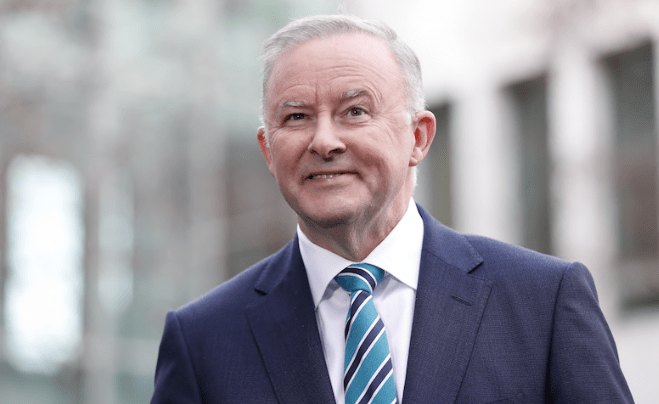
Anthony Albanese this week sent a clear message — he intends to use John Howard’s 1996 model as his strategic guide to the election.
With this in mind, it was predictable the Opposition Leader would embrace the government’s stage three tax cuts, which benefit middle and higher income earners, despite Labor for years denouncing them on equity grounds.
Anyway, Labor couldn’t have guaranteed it would be able to scrap or cap them. They’re already legislated, which would have left their fate in the Senate’s hands.
If the Opposition had based spending promises on the money saved from ditching them, that would have made its costings flaky.
It was also unsurprising Labor walked away from its policy, taken to two elections, to curb negative gearing and slash the capital gains tax discount.
The Liberals in 1996 eschewed their boldness of 1993, curled into an inoffensive ball, and relied primarily on people swinging against the Keating government.
Such tactics don’t always work, and there’s a strong argument voters looking to change government want an appealing alternative.
But given the situation Albanese faces, being as small a target as possible — including limiting his range of election promises — is a sensible course.
This election won’t be a contest where either side has a charismatic leader. Or where there’s any compelling “vision” on offer, much as the protagonists will claim otherwise.
It will be a battle of the pragmatists, of two grey men who are, nevertheless, canny campaigners.
You might like
Scott Morrison desperately hopes that by polling day — in May at the latest — we’ll be clearly on our way to some sort of normality, allowing him to say, “I got you through the crisis”.
His opponent is banking on the government’s mistakes remaining sharp enough in people’s minds for them to mark down the Coalition, making Morrison the first Australian leader to become victim of pandemic incumbency.
Even more than usual, the 2022 campaign is unlikely to tell us much about what the winner will be doing by, say, 2024.
Every new term brings its surprises, because circumstances change and leaders don’t reveal all their intentions. Howard promised he’d “never ever” bring in a GST, and produced a policy for one in his first term.
COVID accentuates the uncertainty. In the campaign, focus will still centre on the exit journey. Albanese will need to be convincing on how he’d deal with its challenge.
Whoever wins, voters will likely be buying a pig in a poke for the longer term.
Albanese has upset some on Labor’s left by Monday’s tax decisions, mulled over for months then rushed through a virtual caucus meeting that morning.
His rationale is that whatever policies Labor has, they are useless unless it can win power. As Gough Whitlam famously said when dealing with a recalcitrant state branch of the ALP, “the impotent are pure”.
The caucus meeting saw questions but not opposition to the tax decisions.
There’ll be a degree of concern about how they’ll go down in left wing seats.
But even if there’s leakage to the Greens Labor can assume most of those votes would return via preferences. For Albanese, the task is to gather votes in the centre.
Bill Shorten’s strategy of presenting an extensive, expensive and politically risky program gave the Coalition the broadest possible front on which to attack Labor.
Next year, the government will have to scratch around a good deal more in its targeting — although parties are endlessly creative in devising scares.
It may focus on Albanese himself, homing in on his inner city “leftie” profile (except the “leftie” part is now pretty diluted).
Stay informed, daily
But the Liberals won’t have the advantage of facing an inherently unpopular opponent, as they did with Shorten. Albanese does not attract the same level of active dislike.
Last election climate policy, which should have been a strong positive for Labor, became a trouble point.
Albanese is yet to produce the revamped version, which will come after the Glasgow climate conference.
It will require adroit management, given internal party differences and separate imperatives for coal seats and inner city electorates.
He’ll need to convince workers in the fossil fuel sector that Labor would provide adequate structural adjustment for them as the economy transitions to clean energy.
Morrison remains mired in difficulties on climate, as he attempts to move to a firm 2050 net zero target while facing resistance from within the Nationals.
Whatever the outcome, it will probably be an uneasy one. The climate issue is scratchy for both sides.
One unknown is the part Labor premiers might play in the election run up. Daniel Andrews, Annastacia Pałaszczuk, and Mark McGowan have all been subject to federal government attacks — they may return serve, directly or indirectly.
If they judge Albanese has a fair chance, they may also calculate they want to get some brownie points for later.
Crucially important for Morrison and Albanese is how the economy pans out over the next few months. That hinges largely on NSW — Morrison’s home state and where he has hoped to pick up seats.
This week NSW premier Gladys Berejiklian announced another month of lockdown. The latest COVID case numbers in Sydney are bad. Pessimists believe the extension mightn’t be enough to do the job.
Treasurer Josh Frydenberg has flagged Australia’s September quarter growth number is likely to be negative and indicated the December quarter is up in the air.
No wonder the federal government is throwing a heap of money at NSW.
Two negative quarters would be a second recession — announced, given the delay in the statistics, just before the election.
For a government with economic management at the core of its pitch and a V-shaped recovery to boast about after the recent recession, that would be a body blow.
Whether, however, in such a time of uncertainty voters would desert the Coalition or be afraid of change is anyone’s guess.
Another view is that a bad September quarter could mean the December bounce back is strong enough to keep the economy out of recession.
With the future and fortunes in flux, Albanese has every reason to be hard-nosed about lightening his boat, even if some of the faithful are dismayed at seeing prized treasure going overboard.
Michelle Grattan is a professorial fellow at the University of Canberra and chief political correspondent at The Conversation, where this article first appeared.
Want to see more stories from InDaily Qld in your Google search results?
- Click here to set InDaily Qld as a preferred source.
- Tick the box next to "InDaily Qld". That's it.