How can we help businesses forced to close their doors for the common good?
The State Government has ruled out financial aid for businesses shut down during the latest lockdown. What can we do to help them? asks Robert MacDonald
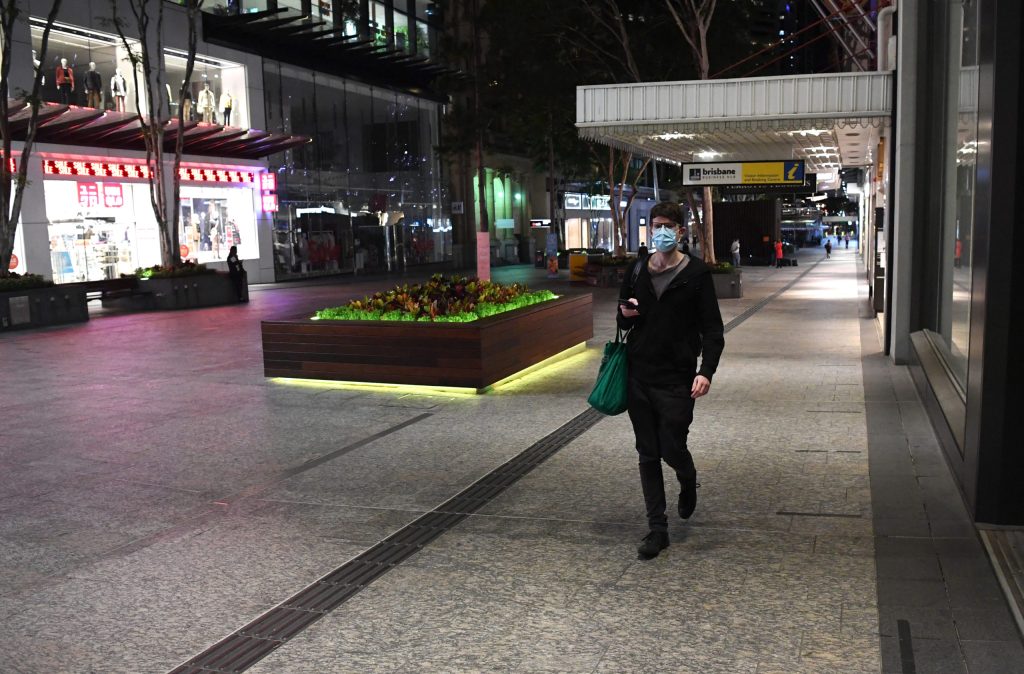
The Queensland Government finally confirmed over the weekend it wouldn’t be paying compensation to all those small businesses that lost money in last week’s lockdown.
The Chamber of Commerce and Industry Queensland had been campaigning for a “COVID-19 hotspot recovery package” – with payments of up to $25,000 for affected businesses.
The lockdown was too short says the Government, which notes that Commonwealth pandemic relief packages normally kick in only after seven days.
And in any event, according to the State, “the evidence in Queensland is that businesses and the broader economy recovered swiftly from the previous three-day lockdowns”.
You could read this as a bureaucratic translation of German philosopher Friedrich Nietzsche’s famous declaration that “what doesn’t kill you makes you stronger”.
Or perhaps some reinterpretation of Darwin’s survival of the fittest theory.
But it is correct that the state’s economy has rebounded quickly from the earlier shutdowns.
It is also correct that many small businesses have, through necessity, reinvented themselves in all sorts of profitable ways, by embracing technology or providing new services to customers.
You might like


What’s harder to know, in the short-term at least, is how many small business owners have just given up.
Bankruptcy numbers don’t provide much of a clue. JobKeeper payments and a temporary easing of bankruptcy rules during the height of the pandemic mean they’ve actually been running at roughly half the normal level for much of the past year and a half.
This might change with the end of JobKeeper and the return to normal operating rules but many small businesses will presumably just shut down without actually formally filing for bankruptcy.
That gets us to the question of what we, the broader community, owe to all those businesses that have suffered during three Queensland lockdowns in 18 months.
Public servants, politicians and tradies keep getting paid and office workers get to work from home whenever the shutters go down.
But non-essential businesses lose money. We don’t know how much but the CCIQ puts the figure at about $600 million for Brisbane’s three-day lockdown in March.
The CCIQ, in its hot spot recovery package proposal, argued Queensland was one of the few states without an emergency fund for lockdown-affected businesses.
Victoria has a program that offers up to $7,000 for eligible businesses, while New South Wales provides up to $10,00 and Western Australia, $2,000.
The Northern Territory also made $1,000 payments to qualifying businesses during its recent lockdown.
But all, inevitably, come with paperwork and caveats, which could well put off many businesses from bothering to apply.
Stay informed, daily
Just paying your accountant to come up with proof of your income loss would presumably chew up much of the handout.
Administratively, there’s a reasonable argument that three days is not long enough to capture the full extent of the financial losses directly associated with short, sharp lockdowns, as opposed to, say, bad weather or any of the other unknowns that can affect a day’s trading.
The CCIQ, in research it did at the time of Brisbane’s last three-day lockdown in March, found that businesses expected losses of between $15,000 to $65,000.
Governments would presumably require more precision, and clear evidence of lockdown-related losses, if they were to start dispensing public money from a lockdown relief fund.
But still, the state and federal governments have all sorts of well-developed systems for handing out public money – from fire and flood victims to drought-stricken farmers.
It can’t be impossible to come up with a nationally agreed scheme for compensating businesses forced to shut down by government edict during lockdowns.
Minimising its rortability would be an issue.
So too, its funding. The states, and certainly Queensland, don’t have much spare cash, certainly not enough to cover – to use the CCIQ’s numbers – the $600 million of potential claims after the March lockdown, let alone the losses from last week’s closures.
But the money could surely be found if there was the political will. Just last week, the Australian National Audit office issued a report highly critical of the Commonwealth Government’s Commuter Car Park program.
It said that not only was it “ineffective”, but also the funding was allocated by “political profile” – auditor speak for ‘rorting”.
And the amount involved? $660 million, not much more than the CCIQ’s estimated loss from the March shutdown.
The State Government made “backing small business”, which it describes as “the backbone of our economy”, one of the six key strategies in its Covid-19 economic recovery plan.
It included $140 million of funding in the 2021-22 budget for specific small business programs; a $100 million Business Investment Fund, $30 million to increase small business skills and capability, and $10 million “to make it easier to do business with government”.
It has also recently created the position of Queensland Small Business Commissioner.
Perhaps what it could also be doing is working with the other states and the Commonwealth to develop some sort of indemnity scheme to cover at least some of the costs carried by all those small businesses being penalised for the greater good.
Want to see more stories from InDaily Qld in your Google search results?
- Click here to set InDaily Qld as a preferred source.
- Tick the box next to "InDaily Qld". That's it.



