Rate rage: How Bundaberg sparked land value firestorm
Queensland landholders have been warned of an impending “farmland rates landslide” by an alliance of primary producer groups in Bundaberg, whose argument has been rejected as a ‘stunt’ by the local council.
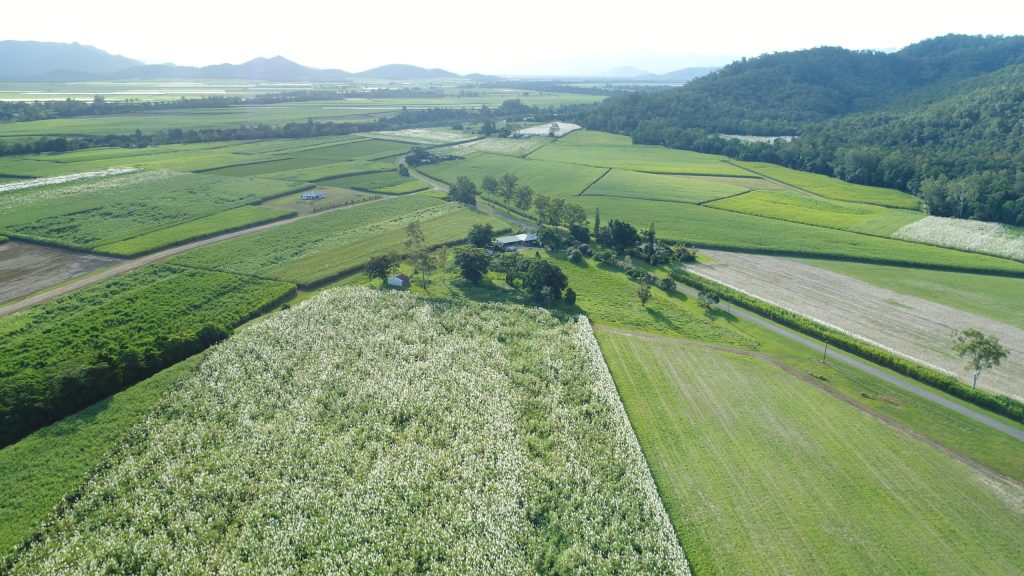
The farmer consortium, comprising AgForce, Bundaberg Fruit & Vegetable Growers (BFVG), Bundaberg Canegrowers and Canegrowers Isis, escalated the rhetoric last week following the release of updated land valuations for 25 local government areas.
The new round of valuations saw increases as high as 155 per cent, prompting the consortium to warn that local government would follow Bundaberg Regional Council’s example and jack-up rates on agricultural zoned land.
According to Agforce’s lead spokesman on the issue, Tom Marland, rising valuations on farmland could lead to councils with “unfettered powers” gouging more rates out of farmers while leaving residential ratepayers comparatively untouched.
Marland cites Bundaberg Regional Council’s response to last year’s valuation updates as the path other councils will follow when they hand down their budgets for the new financial year.
“The valuer-general applied exorbitant valuations to Bundaberg region farmland in 2020, and that council used it as a battering ram to hit all sectors of farming with massive rates rises of up to 235 per cent in a single round, with hundreds seeing their rates more than double,” Marland said.
“This madness has to stop. It could start a farmland rates rise landslide that will massively damage all sectors of the industry, with councils – just like Bundaberg Regional Council – blatantly targeting farmers as a cash cow.”
Bundaberg Mayor Jack Dempsey has told InQueensland that 2020 was an extraordinary year for councils responding to Covid-19, requiring efforts to keep their communities safe and their local economies afloat.
“Bundaberg Regional Council adopted a fair budget in a difficult Covid-impacted year, which confined rate increases to the categories where valuations increased, mainly agricultural and oceanfront,” he said.
“Councillors considered it would have been unfair to spread the impact of those valuation increases to residential ratepayers, mums and dads, pensioners and small business operators.”
According to Dempsey, Marland and his group have been selective with the facts, failing to make it known that the median change in rural land value was 46.6 per cent across 1797 properties, whereas the change in median land value across 28,062 residential properties was 0.9 per cent.
You might like


And only one ratepayer had an increase as high as 235 per cent, he said, which was in line with the ratepayer’s valuation increase from $113,000 to $375,000.
“More than 80 per cent of Bundaberg Regional Council ratepayers had no increase in rates last year because councillors believed it would have been unfair for them to subsidise higher valuations in the agricultural sector,” Dempsey said.
“The overall revenue increase was 3.08 per cent including developmental growth.”
The money trail
While strong commodity prices, positive long-term outlooks, low interest rates and better seasonal conditions are contributing to rising farmland values elsewhere across the state, few areas can compare with the economic transformation Bundaberg has experienced in recent years, shifting into one of Australia’s premier high-value farming regions.
Once the preserve of sugarcane growers, Bundaberg in the last two decades has seen more farmers move towards small vegetable and salad crops, and tree crops such as macadamia and avocado.
The exodus from sugarcane was noted in last year’s Isis Central Sugar Mill annual report, where chairman Peter Russo advised that the 2019 total crop of 972,000 tonnes was the lowest since the 2003 season.
“This reflects not only the poor growing conditions but also the increased competition for farming land from alternate land uses including trees and small crops,” he wrote.
Growers who have remained with cane have also looked to diversify into other crops such as soybeans and peanuts.
In turn, the wider cross-section of commodities has made the region a more attractive investment option for large-scale farmers to broaden their portfolios.
According to The Australian, the local Greensill family, fuelled by financing from the now failed Greensill Capital, purchased more than $40m of land in the Bundaberg region over the last five years, expanding into one of the biggest agricultural operations in the state.
In October 2019, Bundaberg Sugar’s Belgian parent company, Finasucre, paid about $59 million for 10 Bundaberg district properties and 1018 hectares of trees.
Just this week, treasurer Cameron Dick announced Queensland government support for the $13.3 million expansion plans of Bundaberg’s Marquis Macadamias, the world’s largest macadamia nut processor.
Bundaberg Council’s finance portfolio lead, Cr Steve Cooper, says he’s mystified as to why AgForce and Canegrowers are continuing with their attacks on the rate increases, when land valuations have risen off the back of farming’s ongoing success in the district.
Stay informed, daily
He says he still doesn’t understand why the two groups didn’t encourage more of their members to object to the Bundaberg valuations during the feedback window when they were announced last year.
In the latest round of valuations, landholders have until May 31 to lodge their objections.
“Canegrowers and AgForce should have encouraged their members to object to valuation increases when they had the chance. Only a few dozen did so and half of those had their valuations reduced,” Cooper said.
“They should have put forward an argument to the valuer-general that valuation spikes were an aberration caused by corporate land purchases, such as Greensill and others, but they didn’t.
“They possibly saw it as positive to have higher equity with the bank, but they can’t have it both ways and then complain about council rates.
“Canegrowers and AgForce should put down their pitchforks, admit they failed their members and work with council on important regional issues such as the future of Paradise Dam.”
But for Marland, a prominent local lawyer currently leading a class action against the State Government’s Paradise Dam reconstruction, civic leaders like Dempsey and Cooper fail to acknowledge how farmers derive income from their land.
“Artificially increased land valuations which do not reflect the true situation of land values nor the money farmers can make from their land are hugely damaging,” he said.
“Farmers can’t make more money out of the land just because the valuer-general has inflated the prices of the land they work, so that money going into council coffers is disappearing from the local community’s economy because it won’t be spent on services, goods, retail and jobs.
“With these latest 2021 exorbitant land valuations, this scenario could be repeated by other councils in Queensland, massively damaging local economies and the food supply chain as farmers are pushed off the land.”
Queensland Farmers Federation president Allan Dingle has expressed the problem confronting landholders this way:
“For a farmer to realise the so-called increased valuation, they would have to sell up – effectively taking the food from Australian tables and vital dollars from the local, state and national economy,” he said.
“Does the State Government want farmers to walk off the land?”
Reform calls rebuffed
The combined AgForce-QFF position, also joined by the Queensland Resources Council, has resulted in a submission to the State Government to intervene into how councils set their rates.
The submission states that in the case of Bundaberg Regional Council, the 2017 State Government’s ‘Guideline on Equity and Fairness in Rating for Queensland Local Governments’ has been flouted.
Currently, councils are expected but not forced to abide by the guideline, which says councils must not take into account the “capacity of the owner of land” to pay high rates, and that setting of rates charges must not be used as a “revenue-raising mechanism” to subsidise general local government activities.
The guideline also requires “a reasonable level of predictability in the amount of rates levied on parcels of land” and says that “any significant increases in rates should be reasonable”.
QFF, Agforce and QRC are calling for compliance to be made mandatory.
Deputy Premier and Local Government Minister Steven Miles told Parliament in February that the State Government had no interest in intervening in the business of local rate collection.
“The autonomy of local governments to set rates and charges according to local needs and their communities’ expectations is fundamental to the Queensland local government system,” he said.
Want to see more stories from InDaily Qld in your Google search results?
- Click here to set InDaily Qld as a preferred source.
- Tick the box next to "InDaily Qld". That's it.



