Breaking strain: Good news on vaccine over mutant virus fears
The quest for an effective COVID-19 vaccine is a step closer to reality, with Australian scientists proving potential candidates should work against the now-dominant strain.
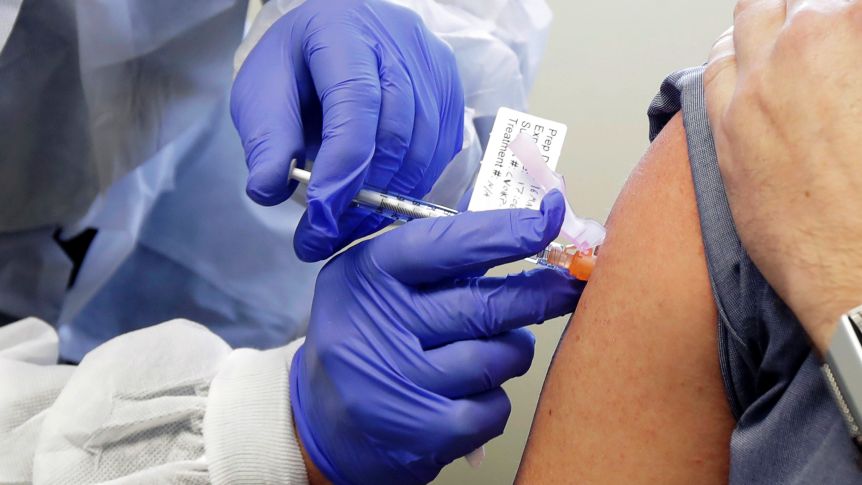
CSIRO researchers have dispelled fears mutations of SARS-CoV-2, the virus that causes coronavirus, could render some developmental vaccines out of date before they are approved.
Most worldwide vaccines under development are based on the original early-pandemic “D-strain” of COVID, but the virus has since evolved to the globally-dominant “G-strain”.
This mutation, also known as D614G, now makes up about 85 per cent of published SARS-CoV-2 genomes.
In a study published on Thursday, researchers found no evidence the new strain would adversely affect the efficacy of vaccine candidates.
The scientists took blood samples from ferrets inoculated with INO-4800 – a DNA vaccine from US company Inovio Pharmaceuticals – and tested them against D- and G-strains.


It was equally effective, with official modelling backing up the study’s inference.
“We found that ferrets vaccinated with Inovio Pharmaceuticals’ candidate developed a good B-cell response in terms of neutralising antibodies against SARS-CoV-2 strains,” lead author Dr Alex McAuley said in a statement on Thursday.
CSIRO chief executive Larry Marshall hailed the findings as critical in the race to develop a viable vaccine.
“This brings the world one step closer to a safe and effective vaccine to protect people and save lives,” Dr Marshall said.
Dr SS Vasan, the CSIRO’s dangerous pathogens boss, said the result was a fillip for hundreds of global vaccines in development as most, including INO-4800, target the virus’ spike protein.
The research could indicate scientists may not need to tweak the vaccine every year, unlike influenza.
Stay informed, daily
“We’ve also found the G-strain is unlikely to require frequent ‘vaccine matching’ where new vaccines need to be developed seasonally to combat the virus strains in circulation,” Vasan said.
The study ran parallel to the pre-clinical study of INO-4800 at CSIRO’s high-containment biosecurity site in Geelong.
Australia’s national science agency recently wrapped up the trial along with another on the University of Oxford’s vaccine candidate, with peer-reviewed reports expected to be released in coming months.
In this week’s budget, the Federal Government committed to $1.7 billion in funding over two years towards the University of Oxford/AstraZeneca and University of Queensland/CSL Limited vaccines.
Want to see more stories from InDaily Qld in your Google search results?
- Click here to set InDaily Qld as a preferred source.
- Tick the box next to "InDaily Qld". That's it.



