Should we be concerned about snag in Oxford vaccine trial?
Science isn’t used to this kind of attention.
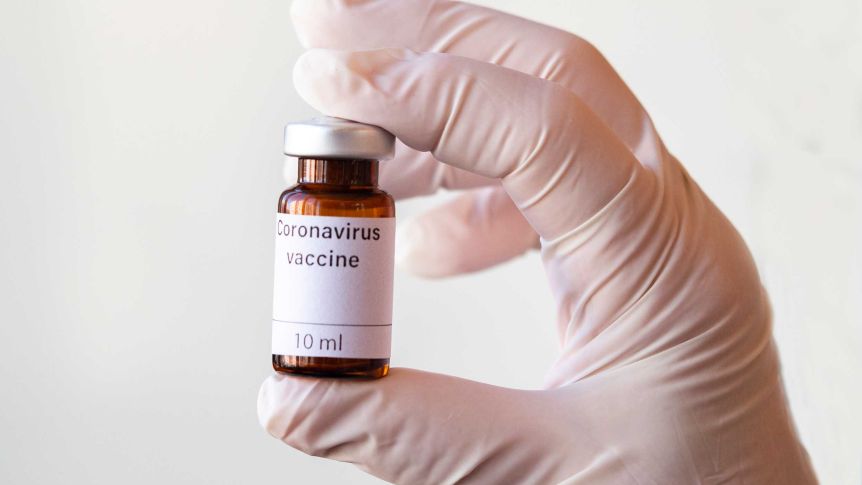
Clinical trials frequently drag on for years and endure plenty of hiccups. In fact, for new vaccines, nine out of 10 trials ultimately fail.
That’s why the trials are there; vaccines are hard.
But with so many hopes riding on a potential coronavirus vaccine — not to mention billion-dollar deals and economic recovery plans — scrutiny and anticipation are at a historic peak.
So when one of the vaccine frontrunners hit a snag overnight, it was headline news.
It also wasn’t a surprise.
What happened in the Oxford vaccine trial?
Details are scarce, but it boils down to the fact that someone got sick.
We don’t know exactly how sick, or whether it was caused by the vaccine, but we know that it was one person out of thousands.
This vaccine is undergoing phase 2/3 trials, which means it’s being tested on thousands of people around the world, including more than 17,000 in the UK.
Half the participants get the fledgling COVID-19 vaccine; the other half get an existing vaccine for meningitis.
Over time, researchers will compare how many people in each group contract COVID-19, to see whether the new vaccine offers protection against coronavirus.
They will also look for rare side effects.
You might like


“To understand if there are rare side effects, we need to vaccinate large numbers of people,” says Dr Kylie Quinn, a vaccine researcher at RMIT.
All along the way there are checks and balances. One of those was triggered overnight when a participant in the UK came down with what AstraZeneca called “a potentially unexplained illness”.
The health news website STAT reports that it was a serious adverse reaction of some sort, but that the patient is expected to recover.
Meanwhile, the New York Times quotes a source saying the patient had transverse myelitis, an inflammation of the spinal cord linked to abnormal immune responses.
That’s plausible, according to Professor Terry Nolan from the University of Melbourne.
“Transverse myelitis is a disease of unknown cause, thought to be possibly auto-immune in nature,” he says.
That places it on a likely watchlist of diseases to monitor when trialling any new vaccine.
What does it mean if one trial patient got sick?
There is a lot still to figure out.
Crucially, we don’t even know yet whether the person who fell ill received the fledgling coronavirus vaccine, or the control meningitis vaccine — just that AstraZeneca’s “standard review process triggered a pause in vaccination”.
That’s partly by design. So as not to bias the results, trials like this are blinded; nobody directly involved knows which patients are receiving which vaccine.
What happens next is down to a separate expert group known as a Data Safety Monitoring Board (DSMB), who will examine the patient’s case in detail, including — if necessary — which vaccine they received.
“Then the DSMB is asked to determine whether or not a ‘pause’ should lead to a ‘stop’, or whether the pause can be lifted and the study continue,” Professor Nolan explains.
Even if the sick patient did receive the trial vaccine, their illness might still be unrelated.
In the words of AstraZeneca’s statement: “In large trials illnesses will happen by chance but must be independently reviewed to check this carefully.”
Or as ABC health journalist Norman Swan put it: “Somebody’s going to get a heart attack, somebody’s going to get pneumonia, somebody’s going to break their leg.
“You’ve got to work out whether this is the play of chance, or whether it’s feasibly attributable to the vaccine.”
AstraZeneca have so far been tight-lipped about specifics.
Stay informed, daily
That’s also not unusual. We don’t typically expect clinical trial teams to offer live, public updates on their processes and results.
The world is watching a complex research process unfold in real time.
That brings challenges, but Professor Nolan believes that on balance, it’s a good thing.
“I think it’s good this is out in the open, it’s good that people understand the background.”

Trials of the Oxford/AstraZeneca coronavirus vaccine are also being conducted in Sao Paulo, Brazil. (Photo: Reuters: Amanda Perobelli)
When will the vaccine trial get started again?
The review should take a few days at the most, and the most likely outcome is that the trial will resume.
“Usually when this happens, it’s very rare for a study to be stopped,” says Nolan, who has sat on multiple Data Safety Monitoring Boards.
“Nearly always, it’ll be resumed, with a level of continued vigilance and awareness about this.”
Professor John Simes, who runs the NHMRC Clinical Trials Centre at the University of Sydney, agrees that a single event is unlikely to stop a big trial like this one.
“With a trial of this size … you’ll find a number of people might have a serious adverse event and you’ll be watching those closely,” he says.
“It’ll depend on the details.”
Where do we go from here?
The fact that the Oxford trial has been paused shows the process is working.
In all likelihood, it will start up again. But it might pause again after that.
Like every vaccine trial, it is staring down the barrel of a 90 per cent historical failure rate.
“These things can happen,” says Dr Quinn.
“That’s why we have a pipeline of vaccines. And that’s why people are working on lots of different types of vaccines.
“If this particular type of vaccine happens to induce side effects, then we can shift to a different type of vaccine which could potentially avoid side effects.”
Whatever vaccine we end up with, if any, it has to clear all the clinical trial hurdles.
Those trials are happening right now — dozens of them, right around the world — and this is what they look like.
There are steps forward and steps backward.
We tread carefully. And we wait.
Want to see more stories from InDaily Qld in your Google search results?
- Click here to set InDaily Qld as a preferred source.
- Tick the box next to "InDaily Qld". That's it.



