NRL legend Greg Inglis reveals how life without sport unmasked a mental illness
Without rugby league, Greg Inglis was lost, spiralling into depression and in a dark place. In his first major interview since retirement, Inglis opens up about years of misdiagnosis, self-medication, and how he was finally able to make sense of the overwhelming mood swings that plagued his life.
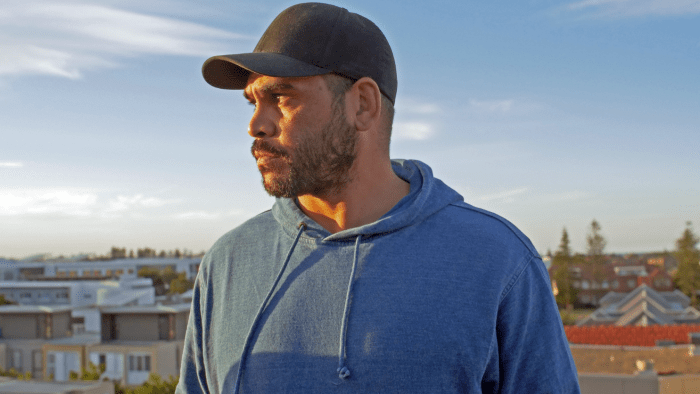
Rugby league is a tough game played by tough people. It’s a culture that doesn’t readily accommodate vulnerability.
And that’s the very reason league legend Greg Inglis is speaking publicly about his battle with mental illness and how he turned his life around.
“I want people to know that they’re not alone, and it is OK to actually reach out,” Inglis tells Australian Story.
Inglis was diagnosed with a bipolar II disorder in June last year, following a second stint in rehab for alcohol problems and depression.
The condition is characterised by dramatic fluctuations in mood and energy, but without the psychotic episodes experienced by sufferers of bipolar I.
After years of misdiagnosis, ineffective drug treatment and self-medication, Inglis was finally able to make sense of the overwhelming mood swings that had plagued his life.
“To get that diagnosed made me understand things a lot clearer about myself,” Inglis says.
“When I was in a high, I would train the best, lift the best in the gym, be so good at everything I did. But when I was feeling down, I just shut down and before I knew it, just snap.”
‘Footy was my escape’
Inglis was just 15 when he was spotted by a scout from the Melbourne Storm while playing near his home town of Macksville, on the NSW Mid North Coast.
He signed a $500 contract that tied him to the Storm, allowing the club to oversee his development.
“Nobody knew where it was going to head, obviously,” says Preston Campbell, Inglis’s cousin and a successful NRL player himself. “But $500 — he’d have that in his glove box these days.”
Inglis was just 18 when he made his NRL debut with the Melbourne Storm, and a year later he played his first Origin game. He went on to represent Australia, captain the Indigenous All Stars and help break the South Sydney Rabbitohs’ 43-year premiership drought.
It has been an extraordinary career.
“When you pitch him against all the greats of our game over 112 years, he’s right up there,” says league legend Mal Meninga. “He’s in the Immortal status.”
For much of his career, Inglis rode out the highs and lows of his bipolar disorder, protected to some extent by the structure that rugby league provided.
You might like


“My escape was training and footy,” Inglis explains.
“Greg was all right during the season because he was playing,” says Shane Richardson, former Rabbitohs CEO and something of a father figure to Inglis.
“The off-season is the most dangerous period for a player because they’ve got so much time on their hands and so much money to spend. So Greg’s off-seasons were always a worry.”
In the first game of the 2017 season, Inglis suffered an ACL injury to his knee. Despite being barely able to walk, he played on for most of the game. It was only afterwards it became clear he wouldn’t play again that year.
Inglis was devastated.
“When I was feeling down, training was the only thing that kept me stable,” he says. “Part of the reason my ACL had that massive effect was that I didn’t have the routine.
“I tried to stay around the club and be involved with rugby league, but something that I loved and had been doing for so long had just been taken away, and I didn’t know how to cope.”
Inglis spiralled into depression and began drinking heavily
“People around me, family around me, were getting affected by my mood swings. Felt like shit, ‘Oh, stuff it, I’ll just have a drink.’ Before I knew it there was one bottle gone. Go for dinner, there’s another bottle gone. Come home, there’s another bottle gone.”
“That was the first time that I really felt that he’d reached out and said, ‘Look, I’m really in trouble and I need some help,’” recalls Shane Richardson.
In May that year, Inglis checked himself into a rehabilitation facility. It was a positive step, but ultimately failed to address the underlying cause of his problems.
“I didn’t leave my room, I got treated different, you know, go on walks while they were in doing group therapy,” Inglis says. “So I came out of that still the same.”
Diagnosis changes everything for Inglis
The following year started well. Inglis’s knee had recovered, and he was named captain of the Queensland Origin side and then the Australian team.
But just hours after being named Australia captain, Inglis’s career unravelled. Driving back from an Indigenous football carnival in Dubbo, he was pulled over by police and charged with drink-driving and speeding.
Inglis impressed many by the way he fronted the media and accepted responsibility for what he had done.
But it was a difficult time, and the inevitable loss of the Australian captaincy hit him hard.
“He went crashing down,” Richardson says. “I knew what he’d be like. I knew how it would affect him. And how he would really struggle with it personally.”
That year also saw the breakdown of his marriage to Sally Robinson, who he’d been with since the start of his career and with whom he had two children.
When the 2019 season came around, Inglis was out of shape and his heart wasn’t in it.
After just two games he announced his decision to retire, a move that shocked teammates and fans alike.
Without the structure of the game around him, Inglis’s mental health deteriorated, exacerbated by his drinking and the cocktail of medications he was being prescribed for anxiety and depression.
“This tablet didn’t work, so you take on a different script,” Inglis recalls. “That didn’t work, or we combine these two. And then alcohol’s another form of depression and it wasn’t good.”
A month after his retirement, Inglis hit rock bottom. Attending the NRL’s Magic Round in Brisbane as an ambassador for the Rabbitohs, he went on a bender.
“It was a really tough time,” Richardson recalls. “For 48 hours we didn’t even know where he was. But we eventually found out and put things in place to bring him home.
“I was fearing that he’d take his own life, because he just couldn’t see any way out of it.”
Stay informed, daily
Although Inglis insists he was never suicidal, he says he “needed to hit a low point”.
For a second time, Inglis entered a rehabilitation clinic, but this time he embraced the treatment on offer.
“I allowed myself to be vulnerable, to open up, to actually let go. Not looking over my shoulder and being judged,” Inglis says. “It was group therapy twice a day, getting lunch with everyone, eating dinner with everyone, having a laugh, doing trivia nights.”
Professor Gordon Parker’s involvement around this time was crucial.
He diagnosed Inglis with a bipolar II disorder and was able to prescribe an effective mood stabiliser.
“It’s one of the most rewarding experiences when you’re managing somebody with bipolar II disorder, because you know that medication is going to bring most people back into a state where they no longer have mood swings,” Parker says.
“The key message to put out there is that bipolar II is a very treatable condition, as long as it is diagnosed properly and the patient is given the appropriate medication.”
‘I found balance before it was too late’
The transformation in Greg Inglis’s life in the past 12 months has indeed been remarkable.
He has moved to the outskirts of Sydney, where he lives happily with his new partner, NRL events manager Alyse Caccamo, on her family property.
“We both support each other, which is really good,” Inglis says. “It’s taken me this long to actually find this balance but I’m glad I found it before it was too late.”
The pair tend to retired racehorses, and Inglis helps when Caccamo competes in local dressage tournaments.
“I’m like Alyse’s strapper,” Inglis jokes. “I get them warmed up, feed them, make sure they’re all right.
“People may not realise this, but with horses, it’s good for your mind. If you spend 20 minutes or so in the paddock with them, it makes you calm.”
Perhaps the greatest indication that mind and body have healed is Inglis’s decision to resume his football career. Next year he will move to England to play for Super League team Warrington, alongside former Rabbitohs teammate Jason Clark.
It’s an opportunity to end his career on his own terms, and he is adamant that he will give it everything he has.
“I’m gone over there to do my best for the team and put my best foot forward for the team,” he says. “My aim is for us to finish in the top four over there and give ourselves the best chance to take out the trophy.”
He is equally adamant, however, that one season will be enough.
“Give it one more crack and then, yeah, definitely hang the boots up.”
‘Seek help. You’ll never be judged’
Like many who have dealt with Inglis over his long career, Mal Meninga admires the way in which he tackled his demons.
“The first sign of healing is actually admitting you got a problem, and that’s what Greg did,” he says.
Preston Campbell says the way Inglis has “come out the other side” of his mental health struggles should be an example for others.
“When you look at somebody like Greg, he was one of the best of us, he was the strongest of us,” he says. “But even he struggled with it. So when you’re somebody that’s struggling, I think you need to look at somebody like Greg.”
Inglis hopes that by speaking publicly about his experiences he will help break the stigma that surrounds mental illness.
“Seek help — that’s my biggest message. You’ll never be judged, the people who judge you are the ones that you don’t want in your life,” he says.
“The people who are there to hold your hand or give you a shoulder to cry on, they’re the ones that you want around in your life.”
Watch Australian Story’s Beating the Blues, 8:00pm, on ABCTV, iview and ABC News In Depth Youtube.
– ABC / Greg Hassall and Quentin McDermott
Want to see more stories from InDaily Qld in your Google search results?
- Click here to set InDaily Qld as a preferred source.
- Tick the box next to "InDaily Qld". That's it.



