Trust a priceless commodity in troubled times
The New York Times passed an impressive milestone this month, with more than 6 million paid subscribers globally. Our latest research suggests it’s no coincidence it achieved this feat during the COVID-19 crisis.
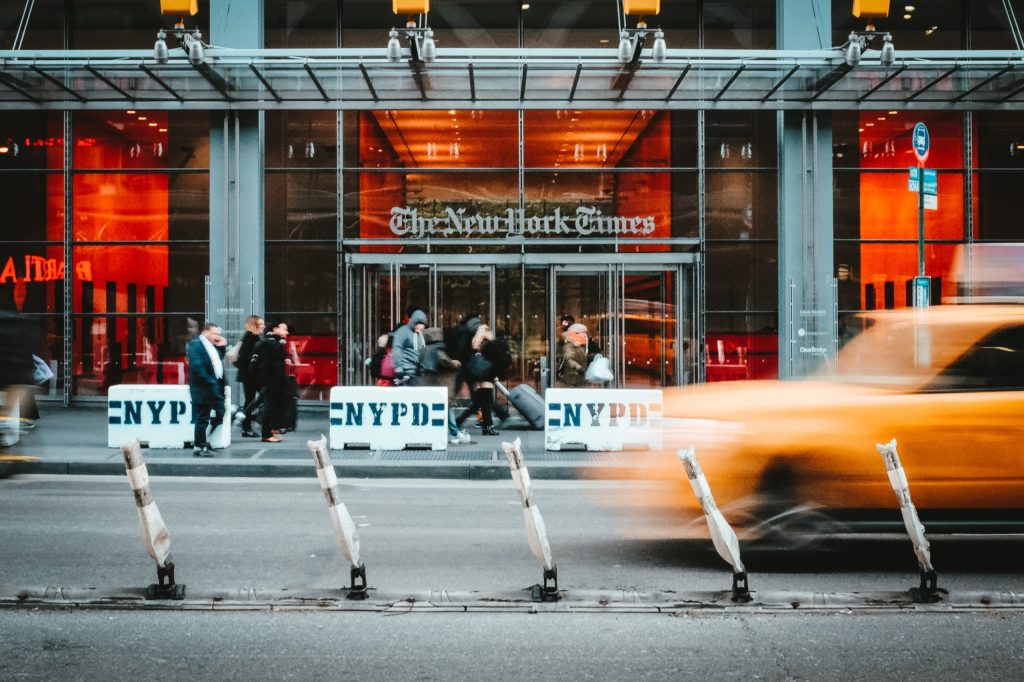
In announcing the subscription gains, NYT’s president and CEO, Mark Thompson, said the pandemic was “a moment for news organisations and newspapers to find audiences and prove the value of trustworthy news”.
These are encouraging words for quality media outlets during the COVID-19 crisis, as the global economy has ground to a halt and newspaper advertising has dried up. You only need to look at your printed daily paper to see how thin it has become, with fewer news pages because of lost ads in recent weeks. Without new and existing subscribers, some will not survive.
Some Australian regional papers have already closed. Others have ceased printing because of the advertising revenue losses.
BuzzFeed, which was struggling before the pandemic hit, has announced it will end its news operations in Australia and UK. It will keep producing stories for a “global audience”, with an emphasis on investigative reporting.
Despite the difficulties facing newspapers in Australia and internationally, our research shows Australians trust professional journalism as a source of information during the pandemic. In America, though, media trust is heavily coloured by partisanship.
Polling of 1,000 Australians and 1,000 Americans commissioned by the United States Studies Centre, La Trobe University and the University of Melbourne asked respondents how much they trusted professional journalists as a source of information during the coronavirus pandemic. Those with highest levels of trust preferred quality metropolitan media brands for news about coronavirus.
We found two-thirds of Australians (68%) trusted professional journalists, compared to 57% of Americans.
You might like


The Australian figure is a promising sign for professional media outlets. Previous research (conducted outside pandemic conditions) has found Australians generally do not trust news media. Numerous studies such as the Edelman Trust Barometer 2020 reveal Australians’ trust in media is low at 39%. That’s even lower than Americans’ trust in media at 48%.
Australians’ trust in professional journalists was also higher than trust in coronavirus information that came from family and friends on social media (60%). But this is not the case in the US, where trust in information about the pandemic from “friends and family on social media” is slightly higher at 61%.
Of the 68% of Australians who said they trust professional journalists to tell them about the coronavirus, their top picks are broadsheet-styled mastheads and ABC news. We also find Australians are using social media during the pandemic more than they otherwise would. Some 88% of Australians are paying “very close” or “fairly close” attention to information from varied media.
Part of the difference we observe in the US is driven by large partisan differences in trust in the media as a source of information. In the US, only one in five (22%) Republican voters trust professional journalists as a source of coronavirus information. They are much more likely to trust friends on social media (62%).
Stay informed, daily
In stark contrast, 86% of Democratic voters trust professional journalists. That’s significantly more than the 57% who trust coronavirus information from family and friends on social media.
In Australia, we found only small partisan differences in media trust. Labor voters (77%) generally have more trust than Greens (73%) and Coalition voters (66%), but the gap was much closer than in the US.
The sharp differences between Australia and the US in levels of trust in the mainstream media, and between Democrat and Republican supporters, is not surprising given that President Donald Trump has spent most of his presidency weaponising the term “fake news” to delegitimise mainstream news media.
At press conferences, Trump will regularly refuse questions from professional journalists, labelling them “fake news”. Not only does this create confusion about what is real and what is not, but studies have found it lowers trust in news media.
Our data show that what people listen to and read is closely linked to their attitudes to the strict lockdowns that governments in both countries have put in place to try to stop the spread of coronavirus.
In the US, individuals who nominated conservative news sources, including Brietbart, AM radio, Fox News and The Wall Street Journal, in their top five media outlets to get information about coronavirus were much more likely to say the lockdowns had gone “too far” or “much too far”.
A similar link is found in Australia. News consumers who oppose the lockdowns were most likely to nominate the right-wing Murdoch tabloids and Sky News as their top choices for information about the pandemic.
Of the Americans who do trust professional journalists, the mastheads they rely up most are The Washington Post, The New York Times, CNN, MSNBC and The Wall Street Journal.
These findings support Mark Thompson’s observation that the pandemic is a moment to value trustworthy news from quality brands such as The New York Times. When lives are under threat, reliable information clearly matters to citizens. Media outlets will hope this recognition translates into more subscribers after the pandemic.
This article is republished from The Conversation under a Creative Commons license.
Want to see more stories from InDaily Qld in your Google search results?
- Click here to set InDaily Qld as a preferred source.
- Tick the box next to "InDaily Qld". That's it.