Council candidates quit over social media abuse
Abuse and defamation on social media dissuade people, including possibly up to a third of current councillors, from running in this year’s local government elections in Queensland.
Abuse and defamation on social media are dissuading people from running in this year’s local government elections in Queensland.
The head of the Local Government Association of Queensland (LGAQ) said an internal survey showed up to 30 per cent of current councillors might not run again, partly because of slurs posted on social media.
“A big factor when you ask them is the sheer abuse through social media,” chief executive Greg Hallam said.
The LGAQ said it could not provide the survey results, received in late 2019, because of privacy issues.
Hallam, who is suing a former MP for defamation, said he had been speaking with about half a dozen councillors affected by abuse on social media in recent months.
“[It] has caused them great stress and it’s affected their mental health,” he said.
“They’ve been grossly misrepresented and very unfairly attacked.
“The voters are entitled to have a crack … but what they’re not entitled to do is call you a criminal or defame you in some other way.”
Queensland’s local government elections will be held on March 28.
You might like


‘It cuts you to the core,’ councillor says
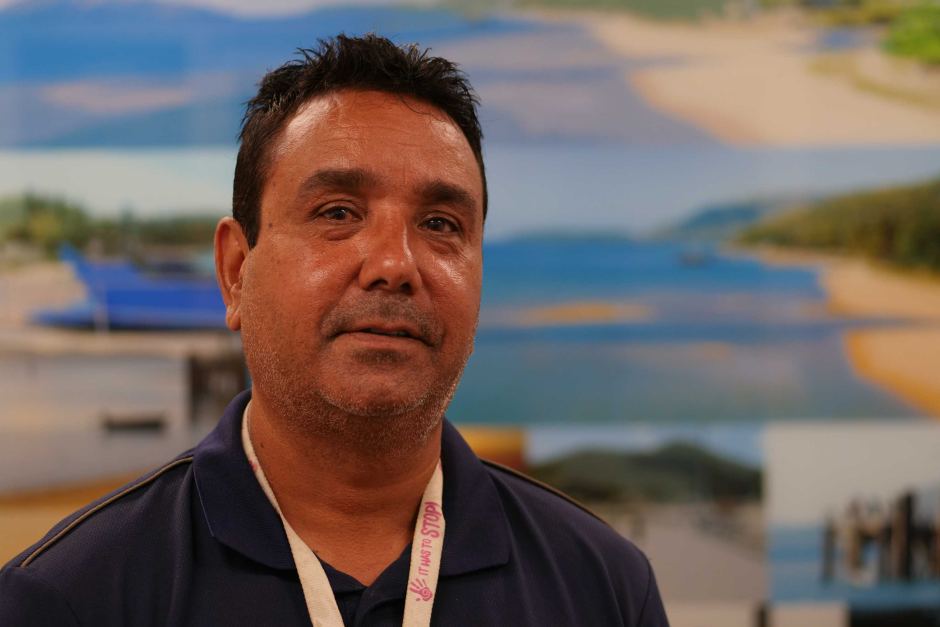
Palm Island Aboriginal Shire Council deputy mayor, Roy Prior, said online defamation was one of the main reasons why he chose not to run again.
He said many of the comments came after the Crime and Corruption Commission charged the council’s former director of finances and its former accountant with fraud offences last year.
“It cuts you to the core sometimes,” Prior said.
“I’ve got a few young daughters. They were very emotional … about some of the stuff that was written on social media about me.
“It’s a thankless job and that’s part and parcel in terms of being an elected leader in any community.
“You’re not going to get the slaps on the back for the good things you do.
“But you’re going to get the kicks in the guts and … some of the social media baggage that comes with it if something stuffs up.”
Candidate diversity, voter response affected
University of Queensland political science expert, Glenn Kefford, said online smearing of candidates could discourage a diverse range of politically inexperienced residents from contesting.
He said it was exacerbating a trend that was particularly seen with state and federal governments.
“[Negative online campaigning is] affecting the types of people who are prepared to put their hand up for elected officialdom,” Dr Kefford said.
Stay informed, daily
“The types of people who are particularly attracted to political careers … [are] often those who … joined a politics club at university and have remained inside political parties from that age.
“That group of people … are a very narrow group demographically, economically.
“That’s problematic for the way voters view our elected officials and how those elected officials can actually represent their local community.”
He said online smearing could turn voters off from voting or affect the results.
“At the national level, we have some evidence that negative advertising, negative messaging, and smear campaigns can work at the margins,” Kefford said.
“I think at the local council elections it could perhaps be even more damaging.”
Calls to make social media giants liable
The LGAQ has set up a watchdog to investigate false and misleading claims candidates make online during Queensland’s council elections — an initiative that has been labelled “largely ineffective”.
Hallam said social media companies needed to face the same defamation laws as traditional media outlets.
“The frustration [the councillors] have is that they have no recourse,” Hallam said.
“There is nothing they can do except get into the very costly, very lengthy process of defamation, which is a difficult thing for everyone.
“The Googles, the Facebooks, the Instagrams, the Twitters — all of those need to be treated as if they were a newspaper or a radio station or TV.”
He said if the tech companies had the same legal obligations, there would be a massive change.
“You will not see the rubbish and the lies and the defamation that currently prevails,” Hallam said.
Kefford said governments needed to improve regulatory responses to “online hate”.
– ABC
Want to see more stories from InDaily Qld in your Google search results?
- Click here to set InDaily Qld as a preferred source.
- Tick the box next to "InDaily Qld". That's it.



